Why was WeWork unable to achieve “economies of scale”?
WeWork's crash, one of the biggest events penetrating startups
/cdn.vox-cdn.com/uploads/chorus_image/image/65666077/1179654314.jpg.0.jpg)
In the second half of 2019, WeWork's crash was one of the biggest events penetrating startups and the sharing economy.
In the end, in April 2020, SoftBank withdrew its additional investment plan and is heading towards catastrophe.
The starting point is an initial public offering (S-1) document submitted by WeWork to the US Securities and Exchange Commission for listing.
Everyone knew that the profit and loss were bad to some extent, but they didn't know it would be this much.
Of course, even a company with a loss can be listed if it can draw a grand future.
Even more so in the US.
However, the current mood is to re-examine the 'reality' of that 'future'.
As I read the WeWork financial statements, I was in a complicated mood.
“Is this kind of business really possible?”
Because of the question of reality.
Today, together with WeWork's financial statements, we will talk about the meaning of 'economies of scale' and how to shape the future of the company.
* For reference, in the case of the United States, unless it is a publicly-traded company, the annual report, which includes all financial statements, is usually not disclosed.
Therefore, we will solve it based on the ‘Summary Financial Statements’ as of the end of June 2019 included in the public offering document (S-1).
WeWork's financial statements shocked many
Brief summary of the financial statements
A brief summary of the financial statements as of the end of June 2019 is as follows.
(1) Statement of financial position
not many good signals

‘Non-current assets’ and ‘non-current liabilities’, which account for the largest proportion, are likely to be accounting numbers resulting from lease (lease) contracts.
The parts labeled as ‘convertible preferred stock’ and ‘reimbursable non-controlling interest’ are also expected to have strong debt characteristics.
If these are excluded, the accumulated deficit results in a ‘complete capital erosion’, that is, the total capital is negative (-). I have $2.47 billion in cash, right?
This amount is comparable to the $2.48 billion spent on investment activities in 2018.
This means that the cash you have now is less than your budget for a year.
(2) Income statement
It showed a tremendous increase in sales, more than doubling every year, and it is expected that this will be the case in 2019 as well.
However, 'operating loss', the root of the problem, also increased along with sales.
It even showed an operating loss that was almost equal to sales.
It left a lot of people in shock.
Is WeWork's statement that it has crossed the break-even point true?

The most important number in a company's financial statements is 'sales'. You have to sell something to have some leftovers.
In particular, for start-ups, ‘sales growth rate’ has an important meaning.
If sales grow quickly, the corporate value will increase, and large-scale investment attraction and listing can be expected.
And there are not many companies that generate profits as soon as they start a business.
It is common to start a business at a loss, then grow sales over the years and then gradually increase profits.
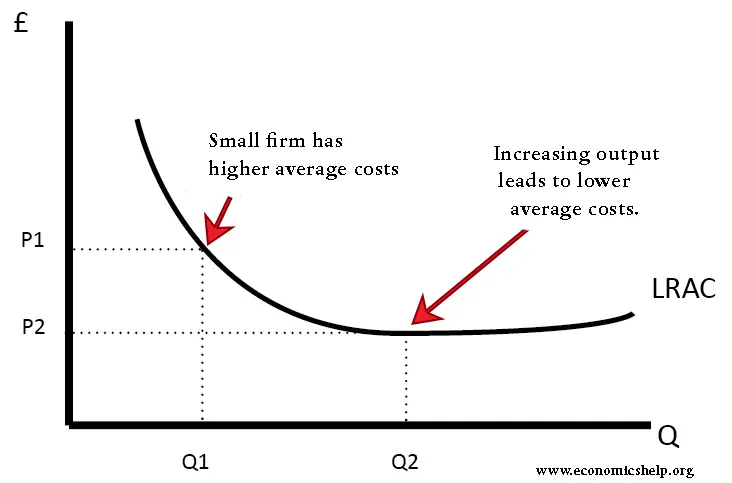
This effect of improving profit and loss through sales growth is called 'economies of scale'.
It is a word that draws a beautiful future for companies with deficits.
Although most companies use this word in their growth process, the problem is that not all companies should use it.
How to achieve economies of scale
Two prerequisites must be met to achieve economies of scale.
(1) Sales growth potential must be great.
Some startups target too small a niche market.
In such a case, it is difficult to achieve a sufficient level of sales, resulting in no economies of scale.
It's a story that doesn't apply to WeWork, which targets the 'office real estate market in the US.
(2) Contribution profit must be generated.
The contribution margin is the number of sales minus variable costs.
Variable costs are costs that increase in proportion to sales.
There are product costs, transportation costs, and commissions paid to distributors.
In other words, it can be understood as “the net margin remaining when the product is sold is the contribution margin”.
The difference between the slopes of revenue and cost is the level of contribution margin.
The two lines may meet when the slope of the profit line is steeper than the cost.
The point where the two lines intersect is the break-even point. What if the slope of the coastline is steeper than the revenue, that is, there is no contribution margin?
The two lines will never meet for the rest of their lives. No matter how large the sales are, they cannot exceed the break-even point.
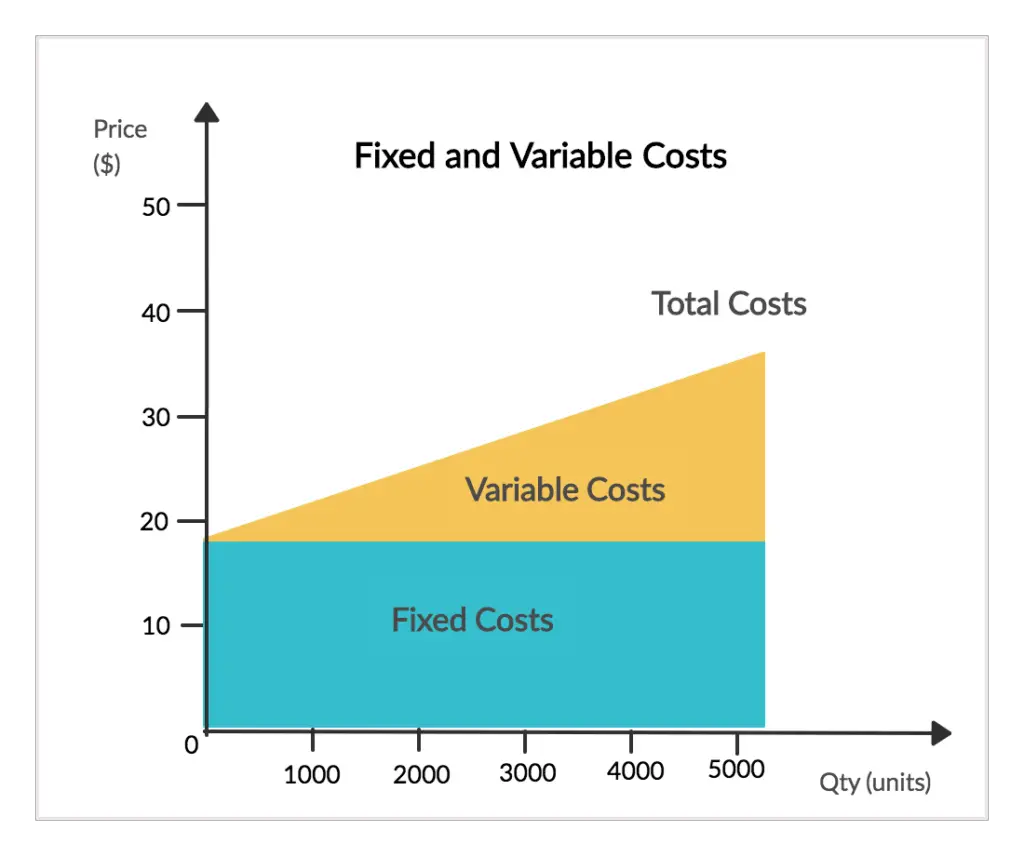
Here, the slope of the coastline is the level of the variable cost.
Therefore, the variable cost must be less than the turnover. However, variable cost is an item in the financial statements.
It's not just set. Depending on the nature of the business, some items may or may not be variable costs.
WeWork's sales are membership sales (rental revenue).
So what are variable costs? These are the ‘rent’ paid to the building owner and the ‘labor cost’ of branch managers.
WeWork kindly calculates the contribution margin and displays it in the public offering document (S-1).
“It seems like an operating loss, but excluding fixed expenses, we achieved a contribution profit of $140 million as of 6 months in 2019”
“And surprisingly, $198 million is an accounting lease expense that has nothing to do with cash flow!”
“We are achieving a contribution margin of approximately $340 million in cash!
But in my view, WeWork's argument has two loopholes.
WeWork's loopholes

(1) Increase the number of branches for WeWork's sales
Due to the nature of WeWork’s sales, it is necessary to increase the number of branches in order to increase sales.
If you want to increase the number of branches, you have to pay rent, but it also requires a lot of investment in the interior.
The investment in the interior is expensed in ‘depreciation’ over several years.
In other words, WeWork's sales and depreciation expenses increase proportionally.
Depreciation is a representative fixed cost item, but I think it is appropriate to include it as a variable cost rather than a fixed cost in WeWork. I overlooked that part.
(2) Free rental service from the building owner
In the case of office buildings, since they have a long-term lease contract, they receive a ‘free rental’ service from the building owner for several months.
Also, the lease fee you pay each year is slightly different.
This will make your cash payments a bit erratic.
However, in accounting, the total rental cost to be paid during the entire contract period is calculated as the monthly average to account for the cost.
So, from WeWork's point of view, 'accounting expenses that have increased unreasonably even though we didn't pay cash' occur.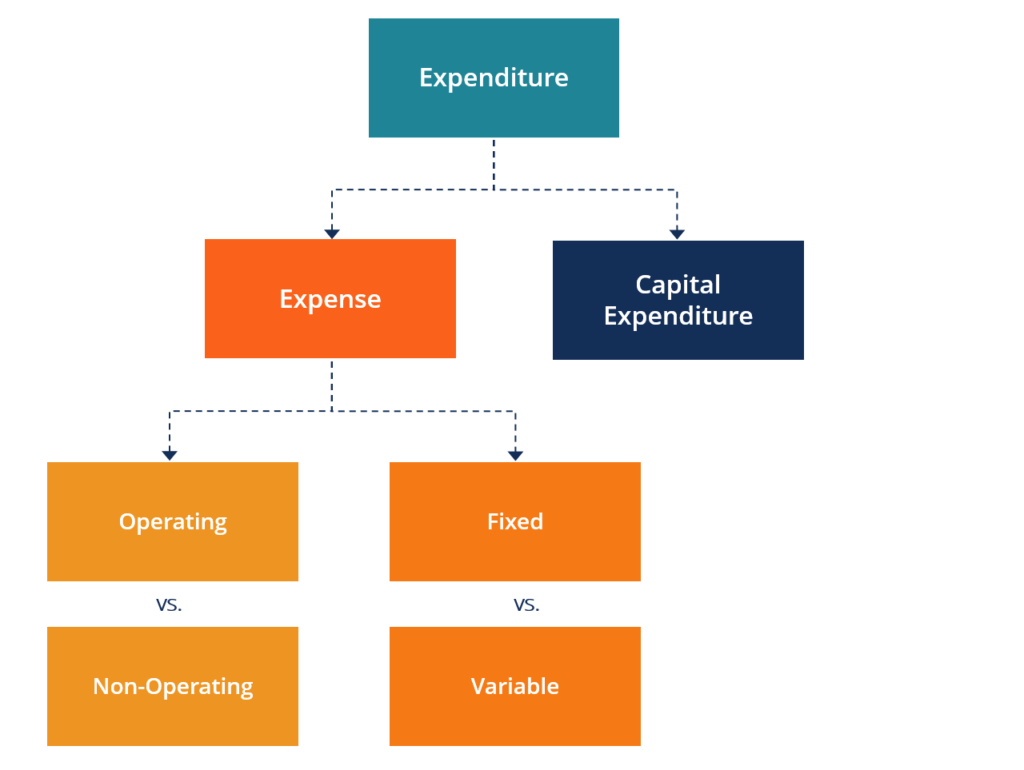
So if you remove that part
We are at an advantage.”
However, the basic principle of accounting is not ‘cash-based’ but ‘accrual’.
Regardless of cash deposits and withdrawals, revenue and expenses are recorded at the time the actual transaction takes place. renting the same building
I'm using it all year round, but since January to March is free, I'll only consider April and December as expenses, not the cost.
This is a treatment that ignores the general accounting principle of 'matching revenue and expenses.
For the same building, it is reasonable to assume the same average cost for the same period.
With the current structure, it can be interpreted as a 'business model that cannot achieve economies of scale no matter how sales grow'.
Currently, it is difficult for WeWork to reach the break-even point.
In order to draw a picture of the future of a company, it is usually necessary to have a ‘prospective income statement’.
In order to make this, we analyze sales in as much detail as possible and analyze cost fluctuations according to sales fluctuations as rationally and realistically as possible.
have to draw It's a difficult story, isn't it?

The important thing is that you should draw and make decisions in accordance with the ‘accrual-based accounting standard’ explained above.
The income statement we're actually looking at.
From a manager's point of view, it is easy to mistake the profit and loss (cash basis) according to the actual deposit and withdrawal details as their own profit or loss.
Above all, cash is the most important and most visible.
But in the long run, accrual gains and losses are followed by cash performance.
In the case of a company with a loss, there may be a temporary situation in which cash is positive even though it is a net loss on the income statement.
In the end, though, it is common for cash to lead to losses along with the income statement.
That's why you need to make decisions from an accrual point of view.
I think this is WeWork's biggest mistake.
“WeWork will benefit from economies of scale, and if we add the value of technology, WeWork will have tremendous value!”
However, in order to picture the future of a company, it is necessary to secure the minimum viable contribution margin from an accrual accounting point of view.
WeWork had to run.
The basic business model had a structure in which it was difficult to achieve long-term profits.
Since it is impossible to survive on its own, it is inevitably thirsty for external investment.
It was easy to increase sales by providing customers with many benefits, such as good interiors, service, and reasonable prices.
Although a virtuous cycle of growth → investment attraction → growth → investment attraction was achieved, it failed to show the ‘profit’ that should be shown at the end of this cycle.
When I saw this, I thought of a bicycle that pedals in the middle of the desert. The bicycle runs hard, believing that there is an oasis somewhere in the distance.
We will broadcast it live on YouTube
Many people cheer for it and send donations.
I feel better after receiving a donation, so I run harder.
I'm getting more and more exhausted physically, but when I stop pedaling, the support stops.
I write.
Then the viewers slowly get bored.
Where is the oasis and if it ever existed, they start asking.
Still can't stop. Because the moment you stop pedaling, death is confirmed.

Do not do business in the desert. It must be done in a meadow where there is water to drink, where there is a shade to rest, and where you can see your destination in the distance.
And in order to discern whether you are standing in a desert or a grassland, you need accounting knowledge.
We don't know what the future holds for WeWork, but what they see in their financial statements is still in the middle of the desert.
Read Also: How is PayPal doing business these days?

Comments
Post a Comment