Weak dollar, 3 points to considerwhether a blessing or a curse for Eurozone and China
Weak dollar, 3 points to considerwhether a blessing or a curse for Eurozone and China
The value of dollar decreased sharply since March of last year, which ultimately resulted weak dollar.
Let's take a look at why a weak dollar is a problem.
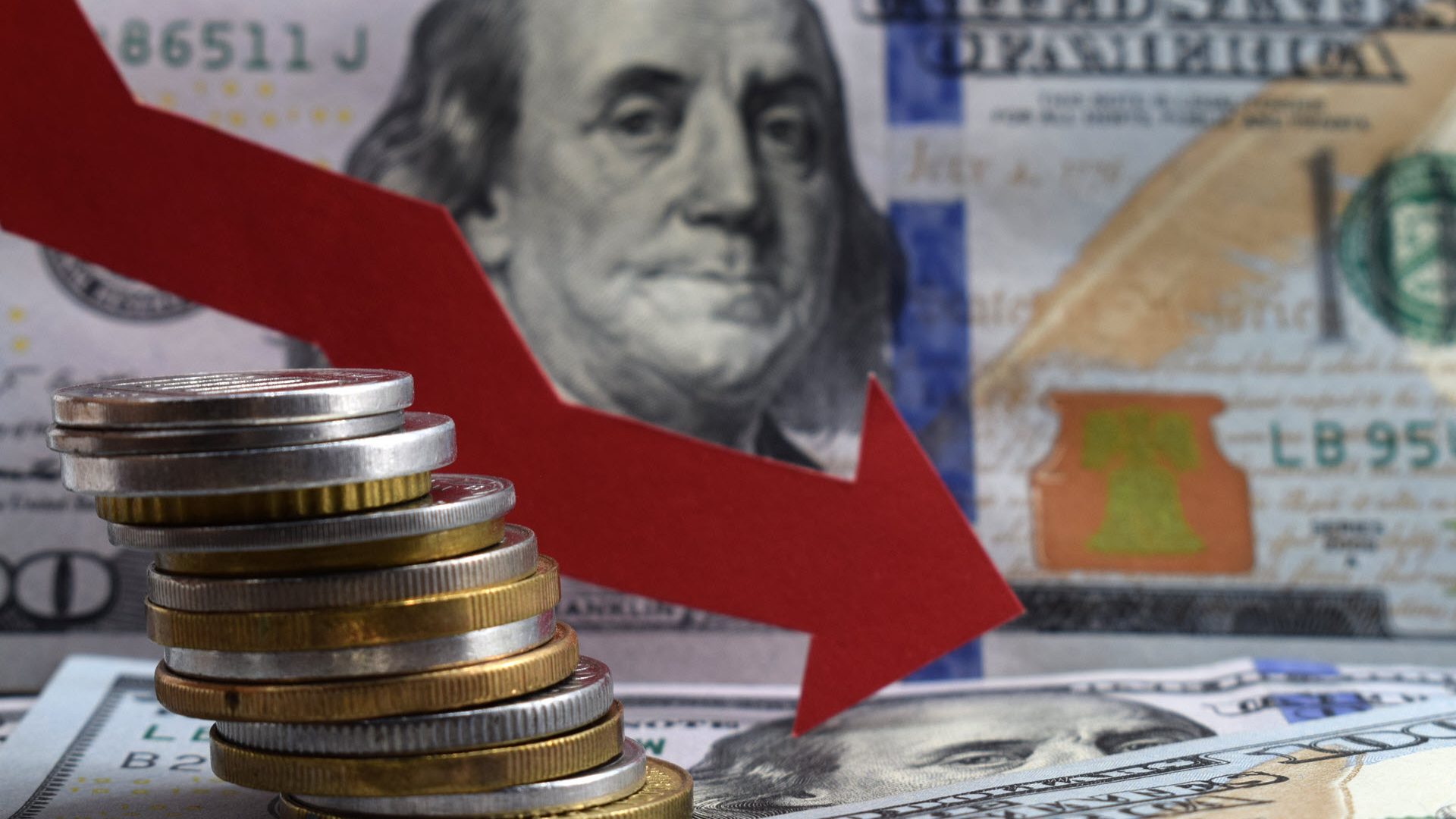 Trading the Weak Dollar[/caption]
The US has been fiddling with interest rate hike cards since 2013, with the fastest economic recovery since the financial crisis. And, in December 2015, the first rate hike was initiated.
Interest rates are said to be the value of money.
U.S. interest rates are the price of U.S. money, and an increase in U.S. interest rates means that the interest you can receive when you hold U.S. money increases, which means that the attractiveness of investing in dollars has increased.
The United States showed confidence in raising rates alone when other countries were hanging on to cut rates or loosen money rather than raising rates.
Yes, it will create a stronger dollar.
This movement continued until the beginning of 2020, after which we met the Corona Pandemic.
Arguably, the US response to the coronavirus has not been very effective.
Several cities have gone into shutdown, and the growth rate of the U.S. economy has been hit hard.
In response, the central bank of the United States, the Fed, is forced to release its own money.
By sharply lowering the base interest rate to zero, it will increase the supply of dollars to the market through unlimited quantitative easing.
How would the U.S. handle the effects of the weak dollars?
The fastest rate cuts and unlimited dollar supply affect the strength of dollar?
[caption id="" align="alignright" width="450"] Factors that affect exchange rate[/caption]
U.S. interest rate cuts reduce the attractiveness of holding the dollar.
The dollar supply itself triggers a depreciation of the dollar.
As a result, the dollar depreciated significantly.
Since May of last year, this depreciation of the dollar has been moving at a much faster pace.
An important point arises here: exchange rates are relative values.
It means the value of the dollar and other currencies, not just the dollar.
A weak dollar eventually means strength in another currency against which it is being compared.
So, which currencies outperformed the dollar?
Quite a number of currencies can be mentioned, the representative examples being the euro, the yen, the yuan, and the Korean won.
The currencies of those countries must have strengthened as much as the dollar has weakened.
By the way, let's think about this for a moment.
Which countries will lead the Eurozone economy?
You're probably thinking mostly German.
Germany leads to the question of strong domestic demand or strong exports.
Germany is a manufacturing powerhouse and has a special advantage in exporting manufactured products.
How about Japan? The image is strong. Yes.
Japan is also not very dependent on exports for growth. China and Korea do not deviate much from this personality either.
This would mean that the currencies of countries that are highly dependent on export growth will be relatively strong.
In dollar terms... Would exporting countries welcome the strength of their currencies?
[caption id="" align="alignleft" width="538"]
![Strengthening and Weakening Currency | Macroeconomics [Deprecated]](https://s3-us-west-2.amazonaws.com/courses-images-archive-read-only/wp-content/uploads/sites/1294/2015/12/03181722/CNX_Econ_C29_005.jpg) Effect of Strengthening and Weakening Dollar[/caption]
Effect of Strengthening and Weakening Dollar[/caption]Probably not.
Before the corona crisis, the world was already in a swamp of low growth and low prices.
As growth slows, so will demand for manufactured products.
After all, domestic demand is insufficient, so you will want to take advantage of demand from other countries.
Selling goods made in my country to customers in other countries means I want to export my country's goods.
It will mean something like this.
The problem isn't just my country, everyone has the same thoughts.
These countries compete for export at the same time.
The best way is if my country stuff has a huge edge... That's not easy.
The easiest way is to lower the value of your country's currency to lower the value of your country's exports.
There is no better way than to become more competitive in price.
But in order to achieve this dream, the value of my country's currency must be low.
If the dollar strengthens against the dollar, the price of the product will rise.
This is not an easy case.
As I said earlier, from March of the last year to the beginning of this year, the value of the dollar fell sharply.
It's down almost 10%.
/GettyImages-1076728392-736a815311f4493aba2a3f1d1a4697e3.jpg)
Fall in the value of the dollar
A decline in the value of the dollar by more than 10% means an increase in the value of my country's currency by more than 10%.
For exporting countries, this means a surge in export prices. If you sell at a 10% higher price in an already difficult situation, it would not be easy to hear that the price is competitive.
Therefore! These countries do not want a unilateral dollar weakness
The very existence of weak dollars in the market is also a psychological game, so I think the dollar will weaken... I think it will.. I think it will..
When the real dollar weakens in the situation, everyone throws the dollar...
A so-called fall in the value of the dollar could become a reality.
A sharp fall in the value of the dollar is, in other words, a sharp rise in the value of the euro, yen, yuan, and won.
It could have a really bad effect on the exports of these countries.
A question like this may be asked here.
https://www.youtube.com/watch?v=x_NHuBwwDKg&ab_channel=YahooFinance
Why do the Eurozone and China hate a weak dollar?
Then can we grow domestically??? It's a question...
One thing that is not easy is that domestic demand growth is difficult due to the corona pandemic.
Another concern is deflation.
When the value of the domestic currency increases, the price of goods imported from abroad decreases.
In this case, the overall deflationary pressure triggered by falling import prices will become a reality.
If deflation, i.e., the price of goods, is likely to decrease, will people spend now or later?
You want to delay spending as much as possible.
Because the price of an item is falling, it will be much more profitable to buy the item after it has fallen...
Then, as consumption does not recover, it is not easy to expect growth in domestic demand.
Yes, the collapse of export growth is also a problem, but domestic demand growth is also expected to be expected due to deflationary pressure.
So the eurozone and China continue to pour in a lot of comments about the rapid appreciation of the euro and the yuan.
News continues to come out, such as that they are seriously monitoring the appreciation of the euro or that they are wary of a sharp appreciation of the yuan.
Yes, the strength of the local currency is burdensome.
After all, they can go out of their way to defend the so-called exchange rate.
In the case of the eurozone, for example, in the case of the eurozone, they are talking about further interest rate cuts even though the current base rate is at a negative level.
If the eurozone cuts interest rates further as the US cut interest rates, the pressure on the euro could be significantly reduced.
Yes, in a global low-growth phase, some countries are showing a movement to make products and export them to other countries rather than borrowing and increasing consumption.
This could create a problem that further fuels the global currency war.
This can be seen as the reason for the unilateral weakness of the dollar being limited. thank you.

Comments
Post a Comment