The story of AMD that erased the 'CPU=Intel' formula
WHAT IS AMD COMPANY??

If you are not very interested in computers, you may be unfamiliar with the company AMD.
Put simply, it is the only company that competes with Intel for the 'CPU', the brain of a computer.
Not only that, but it is also the only competitor of 'NVidia', which has been dominating the graphics card sector for a long time, called 'GPU'.
Taken together, they are the only company in the world capable of producing high-quality CPUs and GPUs at the same time.
Still, the reason why the company is unfamiliar seems to be because it has only been in second place for decades, which is also a big difference from first place.
I was curious about how such a company wrote a reversal story, so I opened the financial statements today.
AMD looks like a new company, but it was founded in 1969. By the way, Intel was born in 1968.
QUICK HISTORY OF AMD
It doesn't make much sense to talk about the long history, so let's summarize the past 15 years or so and various information in a few paragraphs.
(1) The Long Dark Age of AMD(2005 ~ 2016)
CPU is a semiconductor product that has integrated advanced technology. This technology is not at a level that can be completed after 1-2 years of research.
So, depending on the level of technology, the rise or fall of a company is bound to change.
If one generation succeeds in technology development, it continues to prosper for 5 to 10 years, and if it fails, a dark period may continue.
Therefore, companies often draw up a roadmap for 5-10 years and conduct research.
One of the most prosperous companies during this period was Intel.
"Intel catches aliens and tortures them to make CPUs!"
Intel was proud of its tremendous technological development performance to the extent that such jokes are circulating.
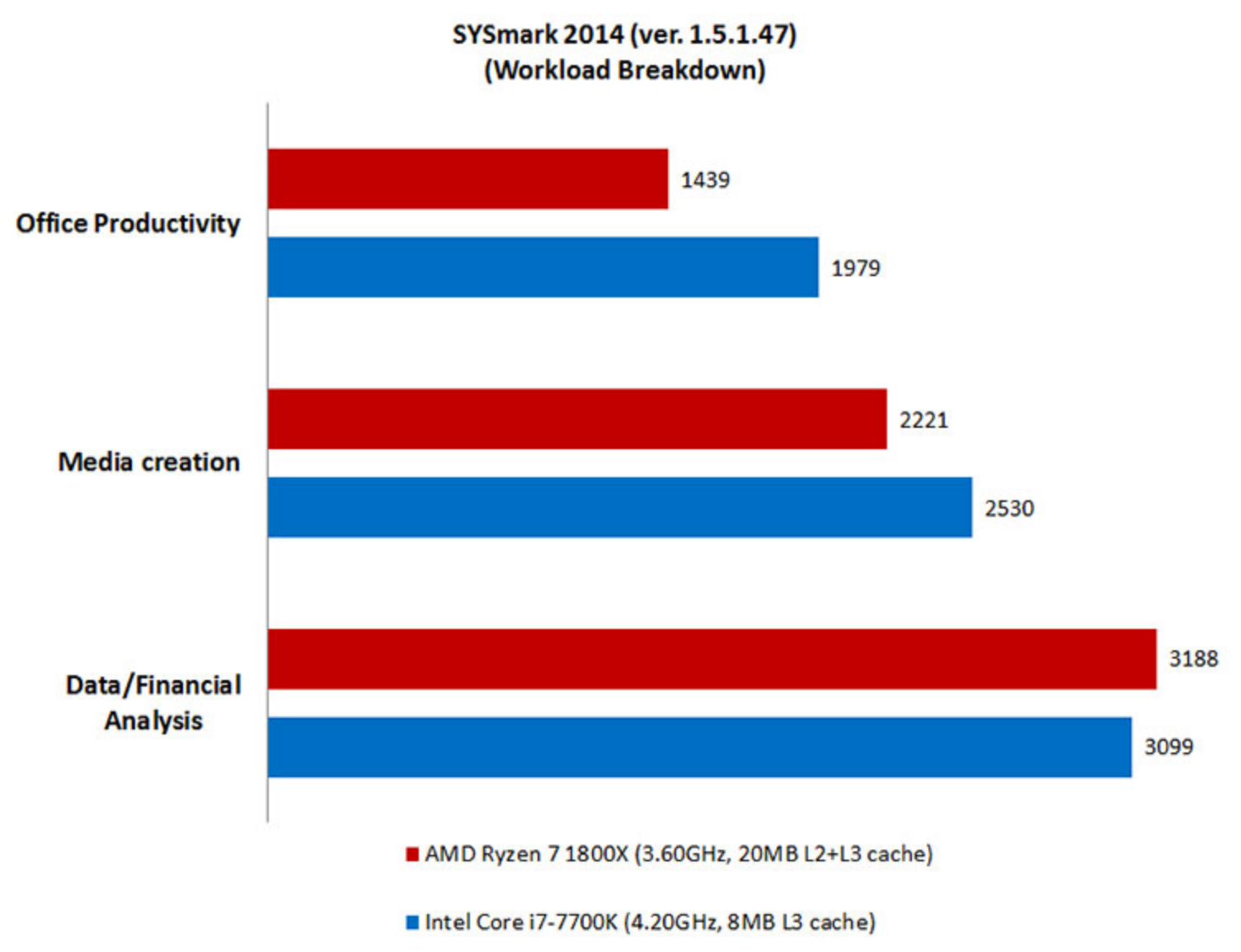
Since the 'Core i-series' developed in 2008 is still being developed little by little, can you guess how great the alien is?
AMD developed 64-bit CPUs before Intel.
In the early 2000s, with a slightly faster CPU and cost-effectiveness, it took over 20% of the CPU market.
However, it may have fallen short of the technological prowess of the Intel aliens, and it has gradually fallen behind and is on a path of decline.
To reverse the situation, AMD developed a product called 'FX processor' and launched it in 2011.
[caption id="" align="alignleft" width="479"] FX processor' and launched in 2011[/caption]
When I opened the lid, the performance was disastrous.
During this period, AMD's revenue was less than 10% of Intel's.
Intel's cumulative operating profit is US$1.7 billion, while AMD's cumulative operating loss is US$5 billion.
In 2015, it fell into complete capital erosion, and Moody's gave it a 'CAA1 (not suitable for investment)' rating.
* Complete capital erosion is a phenomenon in which the amount of equity held by shareholders in accounting is '0' or less.
The financial status of the two rival companies was so different. Can you understand why AMD's stock price was about $1 five years ago?
(2) Give up manufacturing (2009)
During the long dark period, there was an event that played a crucial role in the future of the company. They sold the factory.
AMD, which used to be a company that designs and manufactures both semiconductors like Intel, sells its factories and becomes a 'fabless', that is, a company that only designs semiconductors.
This case is surprising for two reasons.
"If you are a real man, you should have at least a peninsula plant!"
(Jerry Sanders)
 Jerry Sanders[/caption]
The first is that the values of AMD founder Jerry Sanders were lost to the very next CEO, Hector Lewis.
The second is that AMD's CPU 'Athlon' sold well even though it was doing well at the time.
There must have been a lot of opposition from people. However, the deal secured AMD with $3 billion in cash.
Debt was also greatly reduced from 9 billion dollars to 5 billion dollars.
The debt ratio (debt/equity) at the end of 2010 was not good at around 390%, so it is possible that the company would have disappeared in the mid-2010s without this deal.
I'm not sure if it was Hector Lewis' intentions, but this event is a decisive moment for AMD to rise to where it is today.
The reason is that
ㅇ First, through this transaction, we have secured cash that can survive for a long time.
ㅇ Second, it is lighter in size by saving various costs for production.
ㅇ Third, the growth of foundry companies have increased production efficiency, and based on this, rapid technology development has become possible.
* A foundry company is a place that specializes in manufacturing semiconductors.
(3) The Descent of Light and a New History (2014~Present)
In 2014, the most decisive event for the fate of the company occurs. He took over as the new CEO.
Lisa Su. As a semiconductor expert from Taiwan, she is an honorable nickname in honor of her achievements in resolving the stagnant CPU technology and rising prices in one step, caused by the long-standing Intel monopoly.
[caption id="" align="aligncenter" width="768"]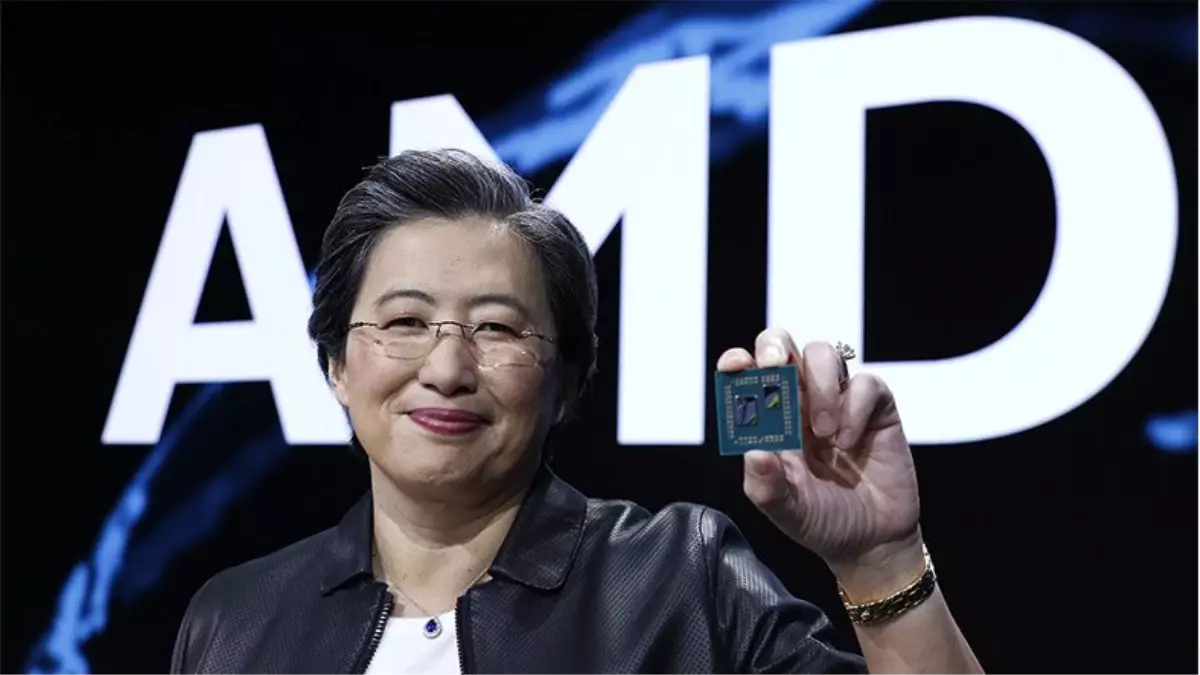 Lisa Su; Taiwanese-American business executive.[/caption]
Lisa Su took on her role as CEO in October 2014.
As I explained above, it is the worst time when the company goes bankrupt.
There wasn't much time left. He devotes his resources to developing next-generation CPU technology, thinking that he will have at least one opportunity if he reduces all costs and devotes himself to R&D.
And hit a home run with the CPU 'Ryzen' introduced in March 2017. to overwhelm Intel products in price and performance.
It was evaluated as a 'game-changer-level product' and sales began to increase.
There, in 2018, the market atmosphere begins to completely turn around as a result of the Intel security incident.
So, from 2017 to 2019, AMD
There is a dramatic reversal
Sales of $5 billion in 2016 exceeded $8 billion in 2019.
Operating profit is also raised from negative to 9% in 2019.
The PC market share seems to have recently risen to 20%, the level of its heyday and has already exceeded 50% in Korea, Japan, and Germany.
If there are no incidents, it is likely to continue to grow over the next several years.
Do you understand why AMD stock price soared?
David's stance against Goliath
Many people liken the relationship between Intel and AMD to David and Goliath.
To be honest, it's David and Goliath. Intel is a huge conglomerate that can generate at least $20 billion in operating profit every year.
Sales are more than 10 times different. In such a situation, how did the second-ranked company compete with the first-ranked company and survive to come back?
HINTS FROM THE HISTORY OF AMD
Going through AMD's history gave me a few hints.
(1) Cut costs and persevere
The best thing AMD did during the Dark Ages was thrift. The company's core costs are 'manufacturing cost' and 'R&D cost'.
Aside from sales that have been sluggish for decades, we have been steadily cutting costs.
This is an unusual case, considering that it is difficult to cut costs because in general, when the business is not going well, people struggle to do anything.
AMD can also bundle the CPU and GPU to make one chip.
'APU' is a technology that can only be used by AMD, which has both technologies.
This chip will be exclusively supplied to the two major home console game consoles, PlayStation (Sony) and Xbox (MS).

This contract does not have a high-profit margin, but it produces steady sales and profits.
It has been a support for the company to survive even in difficult times. It is not an exaggeration to say that the Ryzen CPU was developed with the money earned here.
(2) Don't cling to the successful past, look to the future
AMD's second CEO, Hector Lewis, sold off the soulful semiconductor factory of founder Jerry Sanders.
I think it was possible because it was in the United States that a professional manager who was not a major shareholder was able to make such a decision.
Hector Lewis predicted that in the future, in the semiconductor market, a company specializing in design (fabless) and a company specializing in production (foundry) would coexist separately, and he was right.
Since 2010, AMD has not had a factory, which has enabled significant cost savings.
The cash obtained from the sale of the factory also provided the basis for surviving in the dark times.
In addition, in cooperation with foundries such as TSMC, Intel applied a technology that had not yet started, mass
production of 7-nanometer semiconductors first, and it became the background to be able to beat it.
(3) focus on core competencies
Build products that your competitors haven't thought of
Lastly, Lisa Su's achievement.
AMD makes CPUs, GPUs, and APUs, but has gone all-in on its core technology, the CPU.
After taking office as CEO, he tried to cut costs by carrying out restructuring, but he spared no money to rebuild the research institute that the previous CEO had destroyed.
As a result of focusing on R&D for new products to the extent that the CEO himself devoted himself to research, Ryzen, a game-changer, was released on the promised date.
We also succeeded in creating an image of 'trust and technology' instead of a company that can't do anything' or 'a company that can't believe its announcements'.
Now, IT pros and consumers all over the world are crazy about a single chip with Lisa Su.
To face the mighty Goliath, AMD has prepared a lethal weapon for surviving, predicting the future, and making bold decisions. As a result, it is a natural and simple story.
However, their process to realize this story was by no means simple.
I hope that the history of AMD will be a little courage and insight for David, who is struggling to catch Goliath today.
Also Read: The Invention of Computers – Secrets of the 1970s

Comments
Post a Comment