'The Return of the Obra Dinn', the upcoming breakthrough game about the advent of 'modern epistemology'
'The Return of the Obra Dinn', the upcoming breakthrough game about the advent of 'modern epistemology'

There is also one very famous game.
You may have heard of the 'Age of Discovery'!
With a total of four episodes, it is a series that has gained considerable popularity by dealing with simulations and role-playing from the early pioneering era to the era of international trade after the passage was opened.
It has aged the social studies bankruptcy of many students, allowing them to enjoy sailing and adventure.
However, the main character of today's article is not the 'Age of Discovery'.
Let's take a look at an interesting point on one side of a mystery fantasy mystery game set on a small cargo ship.
The title is 'The Return of the Obra Dinn'
'The Return of the Obra Dean', a mystery adventure that follows the mystery of a missing cargo ship, is not a masterpiece created with a budget of tens of billions of dollars and hundreds of staff.
It's a very small game created by a game designer named Lucas Pope who drew and programmed it by himself.
[caption id="" align="alignright" width="455"]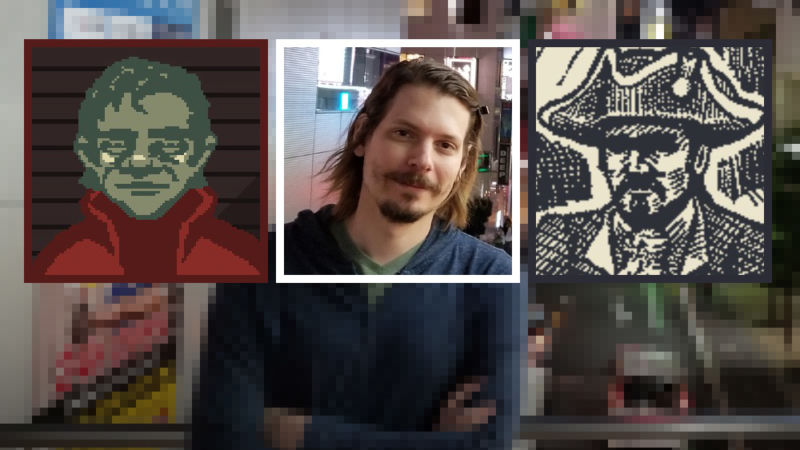 'Return of the Obra Dinn' illustrator Lucas Pope[/caption]
But the world in this game is by no means small.
Rather, it was a topic of discussion because of its detailed settings, puzzles, and rich stories that made it unbelievable that it was made by myself.
As the title suggests, 'The Return of the Obra Dinn' begins with a cargo ship named 'Obra Dinn'.
This ship is a commercial cargo ship with a displacement of 800 tons between the UK and Taiwan.
Since there was no Suez Canal yet, it was a long route from London to the Cape of Good Hope through the Atlantic Ocean.
At the beginning of the 19th century, crossing the oceans by sailing boat required significant risks, if not as much as in the past.
It is by no means easy to sail through rough seas for months on a wooden boat with a displacement of only several hundred tons. In fact, many ships have suffered crises such as wrecks or drifting.
Obra Dinn's fate is the same.
[caption id="" align="alignleft" width="290"] Return of the Obra Dinn[/caption]
After a long voyage, the Obra Dinn was lost from one day, and in 1803, she was officially named on the list of missing ships.
But four years later, this ship is washed up off the coast of Palmers, England, out of the blue.
A ghost ship with no survivors. I have no way of knowing how the ship got tossed. What happened?
The main character who was put in to solve this mystery is a 'damage adjuster' belonging to the East India Company that oversaw foreign trade during the British Empire, which advocated imperialism.
Anyway, the ship has returned, so we have to calculate the insurance payout.
At the time of her departure, there were 60 people on board, but no one survived.
It seems difficult to reconstruct this case where a ghost ship was washed away with simple evidence alone.
The game takes a fantasy setting for full-fledged play at this point.
The 'magic clock' contained in the parcel sent by an unknown person is the key.
Board the Obra Dean and turn on the clock in front of the corpse.
The course of the moment of death unfolds before the player in synchronization.
Important moments of the event in the game
Players who have obtained the Magic Clock will begin their work as a damage adjuster in earnest.
You must verify the names and identities of the 60 people on board, and the cause of each death.
Two elements, a modern role (insurer's claim adjustment) and a fantasy tool (magic clock), intertwine to guide the player into a uniquely atmospheric mystery.

Financial technology 'insurance' that grew with the Age of Discovery and 'Return of the Obra Dean' are basically fantasy novels.
A giant deep-sea giant octopus appears, and an unknown magic box functions as an important object.
However, the background of the game itself is based on reality, such as accurately indicating the year of AD and using maps, characters, and settings of the time.
If you cut off the inference process of ascertaining the identities and circumstances of 60 people with no names or faces, you're left with a very unique job in the game.
A player, that is, a 'damage adjuster'.
The Age of Exploration was the era when huge sea routes were created, generating a huge amount of logistics, and commerce in Europe greatly increased.
https://www.youtube.com/watch?v=UarGCh_0WAg&ab_channel=RyanHill
As new goods circulate and added value arises, the financial industry has taken on a new shape beyond the existing simple lending business.
One of them is the insurance industry. A claim adjuster is a part of the insurance business.
The super long-distance sea route between Asia and Europe was opened for huge profits.
It's a business that can make hundreds of times profits just by bringing it in.
Of course, the ship technology at the time was not safe.
Occasionally, they were lost in typhoons or drowned in windless areas and starved to death. Even pirates aiming for cargo are hitting the table.
Commercial voyages at the time were literally 'high risk, high return' in that once the goods were brought well, they left a big mark.
As a result, 'insurance' in the modern sense begins in earnest.
Financial technology started to catch up to offset the risks caused by inadequate shipbuilding and navigation technology.
This is why many insurers today include the word 'Marine' in their names.
To summarize more roughly, it is not an exaggeration to say that insurance in the modern sense started with the adventure of the Age of Discovery.
A damage adjuster is a professional who quantifies the actual damage and determines whether the damage is subject to the treatment specified in the insurance contract.
Put simply, it can be said that the job is to determine the total amount of insurance money.
Read more: MONETARY SYSTEM, INTRINSIC VALUE OF MONEY AND HYPERINFLATION
The main character (player) of 'The Return of the Obra Dinn ' gets on the ship to check and settle the insurance money on this ghost ship according to the instructions of the East India Company.
[caption id="" align="alignnone" width="565"]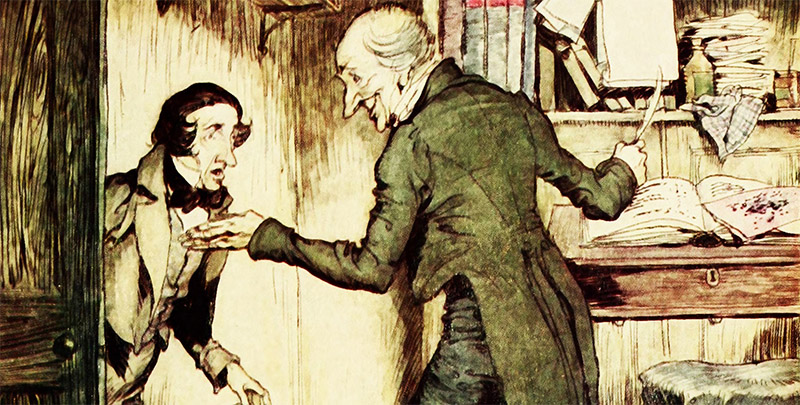 Can You Trust the Insurance Claims Adjuster in ''Return of the Obra Dinn''[/caption]
The original job is to calculate insurance money, but in a situation where all of the crew members are dead, the main character must reveal the cause of the accident and the cause of the crew member's death.
The job has changed to the 'detective' we are used to.
In this way, the game unfolds in the form of a mystery.
The emergence and generalization of modern epistemology
So, the situation the player faces in 'The Return of the Obra Dean' has a very subtle corner.
The sailing boat went missing for unknown reasons during a long voyage to China, but is somehow found off the coast of England.
ㅇ Loss adjusters of insurance companies
ㅇ To solve this mystery
ㅇ Get on the ghost ship
ㅇ The setting to investigate the case is actually a very symbolic composition.
:no_upscale()/cdn.vox-cdn.com/uploads/chorus_asset/file/13291927/Book_05.png)
The rough sea, overflowing with magic and monsters and threatening ships, is a pitch-black realm that human reason has not yet uncovered.
There was no way to know that an accident had occurred other than 'the ship did not return on time'.
In the unknown world, where neither cause nor effect is known, modern humans are looking at the lenses of 'mathematics' and 'rational'.
Would you say that you tried an enlightening approach to the unknown under the name of 'insurance research'?
To say that the cause of an accident has been accepted (accepted) by a human being or a society constituted by man
- Through a series of systems (law, ethics, system)
- A causal relationship has been proven
- It means that it can be widely shared.
A large-scale ship accident full of magic and fantasy has gone through the process of insurance investigation and has come to a realm where rational explanations are possible.
'The Return of the Obra Dinn' takes this point as the heart of the game.
The player reconstructs the thinking of the Obradin under the name of 'rationality'.
For each person on board we only met through pictures, we record their name, nationality, role on the ship, and the cause of their death.
It's part of the job to calculate the insurance payout, but the amount of insurance doesn't really matter to the player.
The game 'Return of the Obra Dinn' is the process of organizing something that existed in the unknown and irrational world in the familiar and universal language of causality.
The unknown 'mystery' that occurred on the ship is finally registered as an 'accident' that is grasped in reality after being observed and recorded by an insurance inspector and finally recorded in a book.
This process can be widely confirmed not only in insurance research in the Age of Exploration, but also in the entire history of mankind from the Middle Ages to the modern era.
 Newton's classical physics, which is considered to have laid the foundation of modern physics, provided a way to understand the motion of objects within the absolute and fixed coordinate system of 'time' and 'space'.
The title of Newton's masterpiece 'Principia' is 'Mathematical Principles of Natural Philosophy'.
This is the part that reveals that it is an attempt to understand 'phenomena' as a system called 'mathematics'.
The philosopher Kant who succeeded him accepted Newton's space-time theory, but tried to understand it as 'a form in which humans perceive the world on their own' rather than an absolute concept.
It means that humans establish the concept of 'space-time' by themselves, give a series of order to the world, and recognize through it.
The 'modern epistemology' represented by Newton and Kant is a concept that has a considerable influence on the perception of the world even today.
The year 1807, which is the background of the game, is a time when modern perceptions are common.
Today we know from post-Einstein research that space-time is not absolute, but rather relative from the observer's point of view.
This does not mean that Newtuck mechanics has lost its meaning. In other words, even for us who have entered the 21st century, the scientific methodology of the early 19th century and the way we perceive the world are still valid.
'The Return of the Obra Dinn', which approaches the unknown fantasy world with a rational approach, is a game with a unique interpretation and reproduction that is difficult to think of as a simple fantasy mystery.
Related Article: P2E, the illusion or temptation to make money through games
The game shows how we came to perceive the world in the age of modern reason through the financial techniques of the Age of Discovery.
Our protagonist, a damage adjuster, uncovers unknown worlds and events through data collection and judgment based on modern rationality.
The results are formalized in the form of a 'journal'.
However, it does not stop at aggregated results only with formulas and data.
At the end of the game, the main character's insurance book appears.
It contains not only the name, cause of death, and insurance money of the crew member investigated as a damage adjuster, but also a qualitative evaluation to determine the attitude of the person in the case.
It pays tribute to those who stood up to it, and pinches the person who acted selfishly to live alone.
Maybe they are suggesting a way to overcome the fragmentation that arises when understanding the world only through data and formulas excessively?

Comments
Post a Comment