Is egalitarian organizational culture preferred in workplace to build a successful team? Let's find out
Is egalitarian organizational culture preferred in workplace to build a successful team? Let's find out
Overview of egalitarian organizational culture in small company and large organization
Michael of Memobox, a well-known e-commerce startup. As soon as he graduated from college, he joined the company as an intern. At that time, Memobox was a small venture company with 10 members, including founding members.
Team leader Michael joined the group with the intention of "getting some experience and preparing for a job right away after only 3 months."
But life never goes according to plan! I was converted to a full-time employee in a month and uh uh... Now, I am unwittingly wearing the team leader's business card.
Should I call it luck, bad luck, or fate...
Anyway! Now, here and there, it is being called a 'memo box living fossil'.
[caption id="" align="aligncenter" width="528"] Does Egalitarian Teams Work Better Together?[/caption]
Looking back over the past five years, the company has grown a lot.
The organization, which had only 10 members, is now approaching 500.
The office, which was inferior to the attic, was rented on several floors of a spacious building.
The number of site visitors, which was only 1,000 per month, is expected to exceed 1 million MAU (monthly users).
Monthly transaction volume also increased 100-fold, from $100.000 to $1 million.
Thanks to the stellar performance, we have raised more than $10 million in investment three times.
Unlike in the past, when wages were often delayed, we are receiving a salary that is not shameful to tell outsiders.
The reason he has been with the company for more than 5 years is that, as mentioned earlier, the organization has a vision and there is hope that he can make a good career!
A bigger reason than this is the 'company not like company' atmosphere.
I was able to express my opinions freely, have passionate discussions with anyone, and even with the founders, I was able to talk freely about the future of the company.
It matched his bubbly personality so well.
In the process, he felt that I was creating a company myself, and he was stimulated intellectually and professionally.
He further believed that he was living a life of respect for individuality and character, rather than being a part of the organization.
This became even clearer when I talked to my friends who were getting a job at a general company and were under stress in the culture of top and bottom clothes.
But though. Its unique horizontal organizational culture (Learn more: HOW TO PREVENT THE RESIGNATION OF KEY TALENTS IN YOUR ORGANIZATION?) becomes dull as time goes by.
The reason is simple.
Because as the company grew, it demanded more manpower.
E-commercebusiness (Read More: BASIC REMINDERS FOR YOUR E-COMMERCE CUSTOMER SERVICE) requires hands in most of the business processes from product planning to packaging.
[caption id="" align="alignleft" width="498"]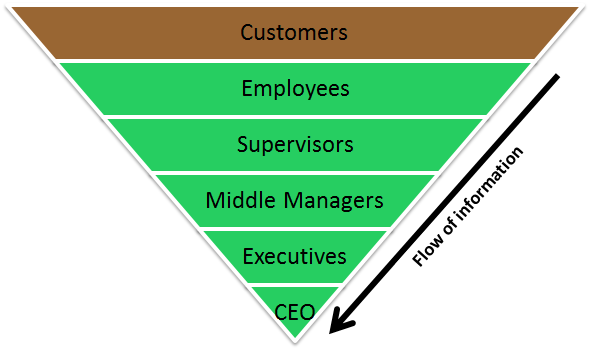 bottom-up approach in business[/caption]
As a result, various departments and positions have been created, and communication has also changed vertically.
Voice transmission from the bottom up has also drastically decreased.
In the beginning, everyone in the organization knew everyone's name and greeted each other, but now there are so many people coming in and going out that it's hard to know who is who.
Since the backgrounds of the members were diverse, conflicts between departments and internal politics were rampant.
Of course, this is not to say that there have been no conflicts in the past.
Still, whether it was killed or cooked, it was resolved through possible conversations, and even if there was a breakup or separation, there was a clear reason.
But now, it is difficult to even understand clearly why and how conflicts and internal politics occur.
Feeling frustrated, I want to meet the founder and talk about the reality of the company, but the person I saw right next to me in the past looks so big now and it's hard to say anything after eating..
Team leader Michael does not feel any reason to stay any longer and is preparing to leave the company.
'Equal organizational culture' has been a hot topic as a management discourse for quite some time.
I often see people who long for it and people who try to make it happen.
Hierchiel vs. egalitarian organizational culture
Is an egalitarian organizational culture feasible?
In my opinion, it is almost impossible to fully implement an egalitarian organizational culture in a company of any size.
Why.
https://www.youtube.com/watch?v=mAHmYKXCfIM&ab_channel=SamatvamAcademy
The first is the issue of instinct.
Animals that live in groups have a common class and power relationship.
There is only one reason.
We strive to effectively 'control' members with different desires and goals.
Just as millions of migratory birds need rules and a rule-seeking existence to fly in a certain direction.
So are humans.
Second is the physical issue.
For a horizontal organizational culture and free communication to take place perfectly, an environment where hundreds of people can share opinions at any time must be created.
However, this means that individuals should be able to communicate with hundreds, thousands, and tens of thousands of people.
According to British cultural anthropologist Robin Dunbar, the number of meaningful relationships a person can have is 150.
[caption id="" align="aligncenter" width="681"] Healthy Work Relationship With Employees[/caption]
For reference, a meaningful human relationship here is a relationship that recognizes at least a name and a face.
More than that, due to temporal and spatial limitations
It's difficult. Of course, the limitations of space can be overcome to some extent with technologies such as SNS.
However, the time limit cannot be overcome by anything.
Naturally, we have no choice but to group as many people as we can communicate. (20-30 people -> 1 team)
If such an organization exceeds a certain number, there is no other choice but to group as many organizations as possible to communicate again.
(20~30 teams -> 1 division)
This is why there is a hierarchical order.
[caption id="" align="alignnone" width="960"] Business Agility Requires A Shift From A Hierarchy To A Network[/caption]
Third, innovative business
It is an issue of characteristics.
In order to create a business model that has never existed before and promote the so-called J-curve (rapid growth), the founder's quick situational judgment and decision-making, firm belief, long-term perspective, sense of mission, and sometimes insight that cannot be understood by the general public is required.
[caption id="" align="alignnone" width="361"]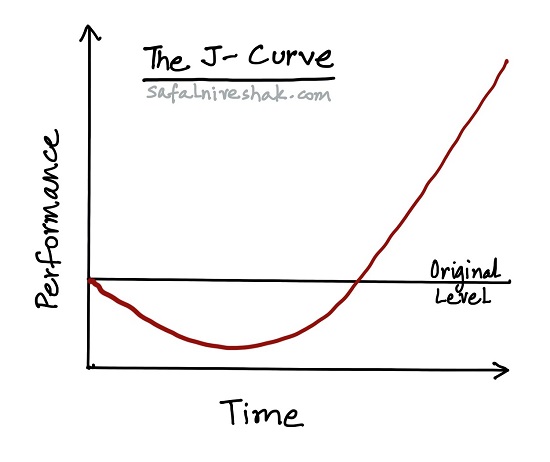 The J-Curve Model[/caption]
The business model that everyone thinks is right
The competition is so fierce that most will fail.
But this is far from democracy or horizontalism
Finally, there is the issue of corporations.
Most corporations in modern society are legally and in form a 'stock company'.
There must be a top-level decision-making group such as the board of directors and management, and major management issues of the company must be decided through a general meeting of shareholders.
The voting right is 'one share, one vote', not 'one person, one vote', and non-shareholders cannot even participate.
In other words, from the beginning, the organization itself is a vertical organization.
Then, is it impossible to implement an egalitarian organizational culture in reality?
Not so.
There are exceptions in everything, and if the following conditions are met, a fairly high level of equality, if not perfect, can be achieved.
* Fewer members of the organization
All you need to do is drastically reduce the size of the organization, which is a premise of the impossible.
Just like the days Michael missed, when founders and interns could roll and work together.
The fewer the better, the more I think it should not exceed 30 people.
The standard of 30 people comes from a group unit where all members can at least memorize faces and names and communicate with each other.
University clubs, class classes, social gatherings, military platoons, etc.
*Outsourcing and technology utilization
[caption id="" align="alignright" width="447"] Why Companies Should Invest in Egalitarian Organizational Culture[/caption]
In order for the company to operate like this, internal members cannot do all the work. Focus on your core competencies and outsource everything that is not important.
In addition, the use of advanced technology is required in all business processes.
* How decisions will be made must be nailed to the rules.
The decision-making structure is specified in the articles of incorporation and bylaws to prevent an equal organizational culture from ending in words
And the standard must be one person, one vote, regardless of share, rank, or position.
* Members of the organization who possess a certain level of competency and character
"Democracy is like two wolves and a sheep voting what to eat for dinner" (Benjamin Franklin)
“Democracy is like an incompetent majority electing a corrupt minority.” (George Bernard Shaw)
"Democracy gives everyone the right to be oppressors" (Percival Lawill)
In order to block these limitations of democracy, the competence and character of the members must rise above a certain level.
Only then can a reasonable discussion be possible.
Combining the stories so far, it is very difficult for a general corporation in its form, and I think developing egalitarian organizational culture is possible.
Another paradoxical situation is that, nevertheless, the hunger for an egalitarian organizational culture and horizontal decision-making structure grows with the passage of time.
[caption id="" align="alignnone" width="461"]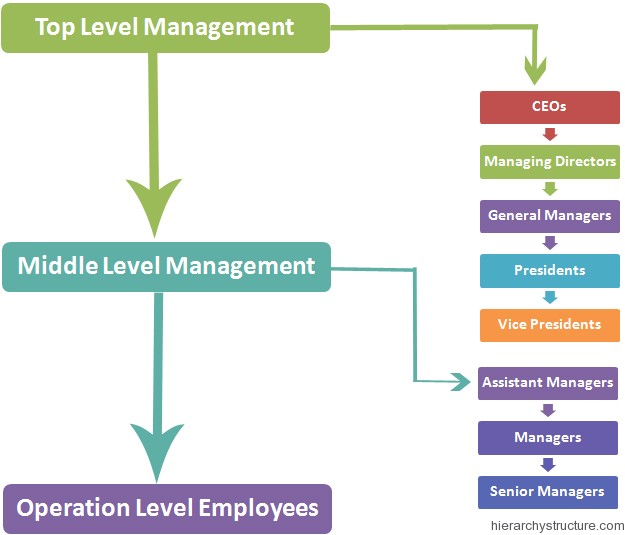 horizontal decision-making structure[/caption]
This is because democracy is advancing socially, and the voluntary and creative work attitudes, bonds with colleagues, and sympathy with the vision of the members are as important as the founder's quick situational judgment and decision-making, firm belief, long-term perspective, sense of duty, and insight.
“I believe that 'equality in human relationships outside of work' is a desirable value and should be pursued by all companies.”
"However, I think that 'equality in human relations including work' may be close to a myth."
"Many people are showing strong obsession and interest in 'equality'"
"I think it's probably because of the backlash against the established corporate culture and the illusion of the startup corporate culture."
“The most important thing is that corporate growth and personal growth coincide and all employees work happily.”

Comments
Post a Comment