Inflation and Interest Rates: The 2 Obvious Gray Rhinos of the Stock Market threatening the Global Economy
Inflation and Interest Rates: The 2 Obvious Gray Rhinos of the Stock Market threatening the Global Economy
[caption id="" align="alignright" width="361"] Black Swan Or Gray Rhinos of the stock market[/caption]
A big, unpredictable shock is called a 'black swan'. Contrary to this, or similarly, there is a term for the danger we should be wary of: the gray rhino.
If 'black swan' is a risk that could not be predicted at all, 'gray rhino' means a danger that is running fiercely right before your eyes.
It is also a term that once became popular with concerns about China's economic situation in 2017.
So, what are the gray rhinos of the stock market right now?
/GettyImages-157311703-d5072cb293f44aa4a59c274e56fbd963.jpg) Inflation considered on of the Gray rhinos of stock market[/caption]
Inflation considered on of the Gray rhinos of stock market[/caption]First of all, there is inflation.
Grain prices and raw material prices soared around the world, and freight rates also rose.
The expected inflation index (treasury bond yield - inflation-linked bond yield) also stood at 2%. What's wrong with inflation?
Inflation is a problem, but since inflation has been at a low level for a long time since the 2008 financial crisis, it is difficult for inflation in the 2% range to pose a major threat in itself.
The problem is interest rates. Inflation and unemployment are the main factors that determine the base rate at the US Federal Reserve.
As a state institution, it has two missions: stabilizing prices and promoting employment.
Since the 2008 financial crisis, the Fed has maintained its stance of not raising interest rates unless inflation occurs.
The inflation target is 2%.
So, when the inflation rate exceeds 2%, the stopwatch for interest rate hikes begins.
Why is it a problem when interest rates rise or drop?
It's a very important and subtle issue.
Most experts think a rate hike is a disaster for the stock market, but most investors ask, 'Why is a rate hike so important?'
In conclusion, while interest rates are very important in theory, they may or may not have a major impact in practice.
And now, the potential for a major impact is high.
So that's the problem.
https://www.youtube.com/watch?v=JXMHEJSh2x4&ab_channel=JPStrategicInvestments
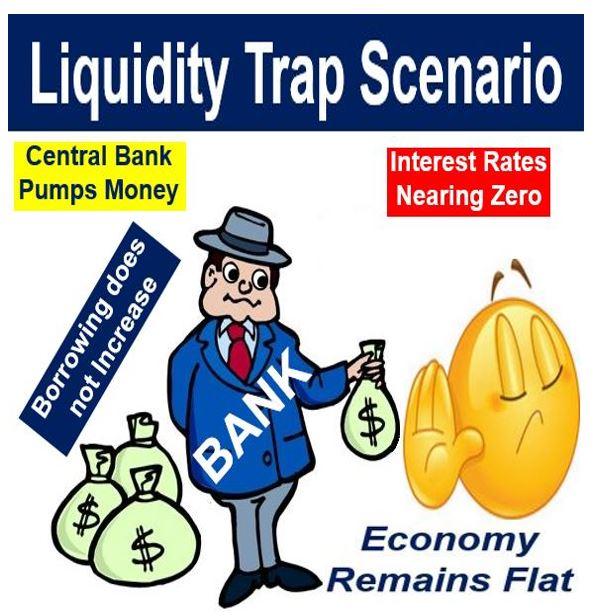
Low interest rates also provide liquidity and vitality to the economy, but when the economy is really bad, lowering interest rates has little effect on liquidity.
It's called the "liquidity trap." This is a fact experienced at the beginning of the 2008 financial crisis.
So, at the time, the Fed used an unconventional liquidity supply policy called ‘quantitative easing’.
Even if the liquidity effect is small, low interest rates affect the stock market indirectly to some extent.
The first is a psychological effect that makes you think that there is a lot of liquidity because of the low interest rates.
Second, it raises the fair price of financial assets.
This second is very important. Do you know the term discount rate?
How much is $1,000 worth one year from now?
It would be worth less than $1,000 today.
The value of money usually decreases over time.
So how small is it? The concept created to answer the question is the discount rate.
The discount rate is different for each financial asset.
Stocks and bonds are different, and each stock is different.
Each discount rate is different, but the common factor in all discount rates is the risk-free interest rate.
Risks vary by financial asset, but it can be said that the risk-free interest rate is set first, and the risk is additionally discounted for more risky assets.
If the risk-free rate is 1%, corporate bonds add 2% to 3%, stocks add 5% to 6%, and more risky stocks are given an additional discount commensurate with that.
The higher the discount rate, the smaller the future cash value.
Conversely, as the discount rate decreases, the value of future cash will increase to a level similar to that of present cash.
Did you understand this far?
To put it simply, if the bank interest rate were 10%, $1,000 in one year would be $900.90 today (100/1.1), but if the interest rate at the bank was 1%, $1,000 in one year would be worth $990 today (100/1.01).
However, this is only a theoretical story, and in fact, people invest without paying much attention to interest rates.
As always with macro variables, interest rates are also a macro variable that can be interpreted from both sides.
A rate cut may act as a liquidity supply and a drop in the discount rate, but it can be seen that the economy is so bad that the state must intervene.
Although a rate hike can reduce liquidity and increase the discount rate, it can be interpreted to mean that the economy is too good to worry about overheating.
Now let's get to reality.
What do hot stocks in the stock market have in common?
[caption id="" align="alignleft" width="482"] Hot Stocks To Buy Now[/caption]
There will be a point with high growth potential in the future.
A characteristic of the discount rate is that it acts as a compound interest.
When the discount rate is low, the value of the future “dream-fed” company soars.
Recently, the concept of ‘equity duration’ has been attracting attention.
Those who deal with bonds will be familiar with the concept of duration.
Bonds with longer durations are more sensitive to interest rates.
Stocks can be viewed in a similar way to bonds in terms of cash flow payback period.
Stocks do not have maturities like bonds, so unless the company goes bankrupt, the cash flow period is almost infinite.
Then, if the discount rate decreases due to low interest rates or other reasons, the value of the company living on the dream of the future will rise significantly. Here's another scary concept.
As the discount rate converges to 0, the value of a company with a long duration rises exponentially.
Is it a little difficult? It's not very strict, but let's make it simple:
1) When interest rates are low, the value of a company that lives on its dreams can skyrocket.
When the interest rate is low, investment in safe assets such as deposits becomes less attractive, so there may be a tendency to focus on assets that can expect even a little higher return, such as stocks.
2) The longer the duration, the more sensitive the price to interest rates.
It's not an exact explanation, but you can think of it as, for example, that a one-year bond will be affected twice as much as a two-year bond if the interest rate rises from 1% to 2%.
3) When there is liquidity in the market, someone is playing the role of absorbing liquidity.
The current situation in which the stock price of 'a company that feeds on dreams' is soaring can be interpreted as a phenomenon that occurs when the interest rate, which is virtually zero, and the characteristic of stocks that can actually calculate the maturity at will are combined.
In the stock market, companies such as bio, tech, and platform companies that live on the dream of the future acted as a kind of ‘liquidity absorbent’.
When it comes to valuing ever-rising stocks, equity duration can be a double-edged sword.
[caption id="" align="alignleft" width="330"]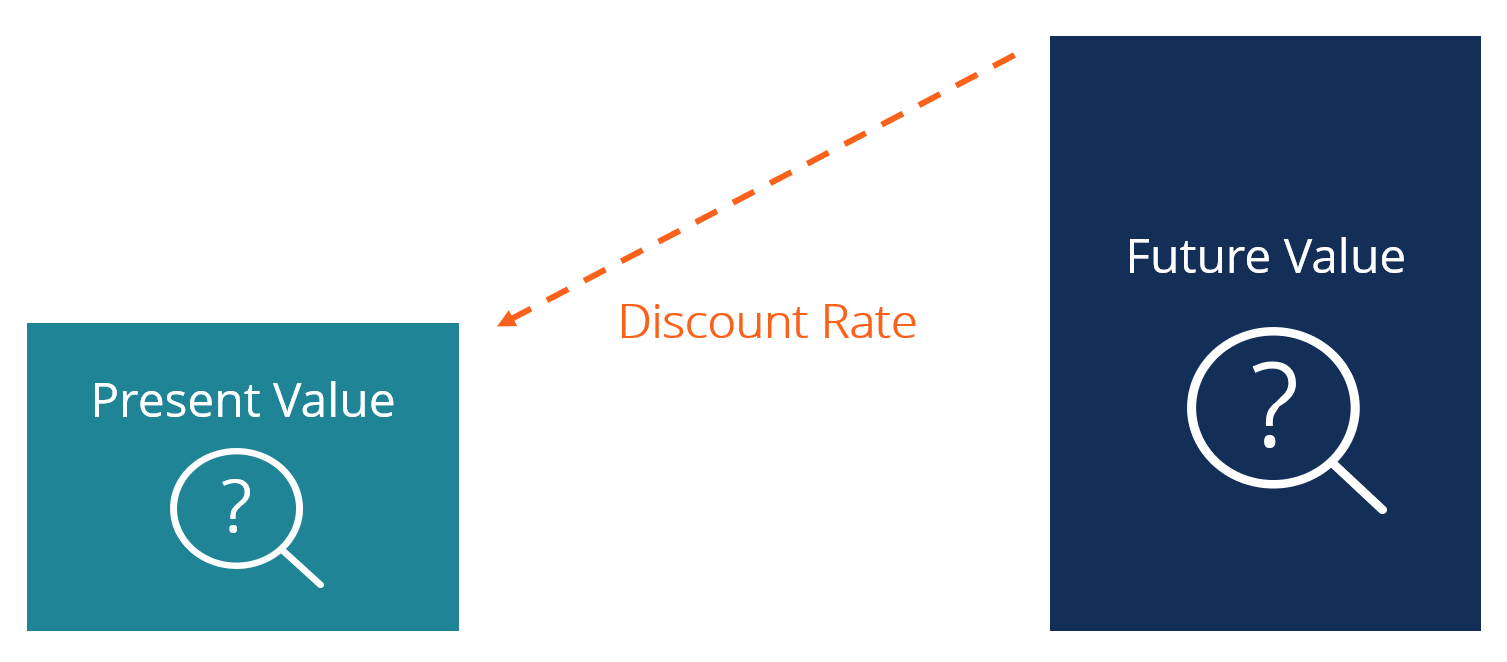 Discount Rate: Present Value to Future Value[/caption]
Combining a long duration with a near-zero discount rate can justify an almost infinite enterprise value.
On the other hand, if the discount rate rises even just a little, it can justify the plummeting corporate value.
Shareholders who have invested in companies that live on their dreams usually feel embarrassed at this point.
“No, I have invested in the vision of this company, but what kind of bank interest determines the value of this company?
Yes. The value of a company depends on how well you do business and realize your dreams.
That's the first. However, since it is a dream of the future, how much you discount the dream of the future to the present is greatly affected by interest rates.
If an increase in value is justified by a decrease in the discount rate, a decrease in value may be justified by an increase in the discount rate.
Double standards are very risky when it comes to investing.
Coming back to reality
The problem is that interest rates are already rising.
This inevitably leads to a higher discount rate. Even if the Fed doesn't raise interest rates.
In addition to this, there are a lot of bad things we will see in the future.
Of course, there are objections to all these arguments.
In August of last year, the Federal Reserve introduced an “average price target” system. If the annual average of the inflation rate does not exceed 2%, it will not intervene.
Therefore, you can say that there will be no rate hike for a while, don't worry.
The situation when the inflation rate fell below 2% and there was no need to worry about an interest rate hike at all, and the situation where the stopwatch was turning over 2% is significantly different.
And fundamental factors such as the unemployment rate, corona issue, and slowing momentum are once again a reason for the government to use fiscal stimulus measures strongly, so it is also a basis for liquidity expansion to continue.
Related: Was the pandemic a grey rhino or a black swan?
Yes. Yes. I largely agree with this objection.
However, it is quite inconvenient that everyone agrees with this objection, a ‘good interpretation’.
Anyway, inflation is right in front of us, and market interest rates have risen.
And to write a fiscal stimulus package, you have to issue bonds.
As bond issuance increases, interest rates rise. Unlimited fiscal stimulus without raising interest rates?
From an Modern Monetary Theory (MMT) point of view, it is possible. Unless confidence in the dollar is eroded.
Former Fed Chairman Janet Yellen, who has been nominated as US Treasury Secretary, said, “We will not induce a weak dollar” should be interpreted in this context.
A weaker dollar is a major impediment to bond issuance without raising interest rates.
The recent weakness in the dollar and rising market interest rates have been a strain on the Fed.
I needed to calm down. After all, officials are human too, so they don't want to be held accountable.
I don't want to be stigmatized for ruining the game or the market by touching something wrong.
If the stock price declines, what are the possible scenarios?
The problem is that if the moment comes when investors pay attention to these bad news, which they are observing and ignoring, it could become a vicious cycle that recursively encourages stock price declines.
People always try to find the cause of a phenomenon after it has occurred.
When a stock price falls for any reason, and you want to find out the cause of the fall, there are a lot of bad news that can be answered.
The question is whether to view the decline in stock prices as an opportunity to buy at a low price or as an opportunity to take profits.
In case you misunderstand me, this article is not intended to predict a stock price decline.
It is a dimension to summarize the question ‘If the stock price declines, under what scenario?’
[caption id="" align="alignleft" width="426"] Stock Price Declines: Is it a good news or bad news?[/caption]
I'm writing this because I think it's time to be very wary of the downturn.
So, I'm definitely not saying, 'Sell the stock when a downturn is imminent'.
After you sell your stock, you are psychologically “short”.
It hurts my heart so much for the subsequent share price rise.
And then you buy the stock again at the higher stock price, and from that point on, hell unfolds.
Isn't the party most glamorous right before the end?
Anticipating a fall and jumping first can be self-harm.
As always, a neutral position is important.
If the stock price continues to rise, it feels good enough, and even if the stock price goes down, you need to keep it in a state of being able to sustain it, in order to have composure.
Jumping off the belt and tightening the belt
It's an entirely different story. Please fasten your seat belts and have a good ride.

Comments
Post a Comment