'Impossible Foods': The reason why a genius professor at Stanford University had no regrets
'Impossible Foods': The reason why a genius professor at Stanford University had no regrets
It was 2009. Professor Patrick O. Brown of the Department of Biochemistry at Stanford University has taken a sabbatical.
Professor Brown, who was 55 at the time, decides to find out what projects he might try in the future.
It wasn't necessarily necessary to do something.
He was a scientist who had already accomplished many achievements.
After contemplating the reason for starting the business, he decided to try making plant-based meat that tastes like real meat.
Also called fake meat.
In the US, where there are not many vegetarians, plant-based hamburger patties are easy to find. It's usually called 'Vegetarian Burger'. but the taste is really bad
Professor Brown discovered the potential and founded Impossible Foods in 2011.
[caption id="" align="alignleft" width="410"] US meat-free firm Impossible Foods[/caption]
He says he founded Impossible Foods to save the planet above all else.
A cow eats 5 tons of feed and consumes 3000 gallons (about 11,350 liters) of water.
It takes 15 kg of greenhouse gases to get 100 g of protein from beef.
According to the Food and Agriculture Organization of the United Nations, the world's population is expected to reach 9.5 billion by 2050, and the world's annual meat consumption is expected to double to about 100 billion.
At the current rate, human consumption of meat is no longer sustainable.
Nine years have passed since Professor Brown founded Impossible Foods.
In the meantime, many celebrities, including Microsoft co-founder Bill Gates, have invested in it, and Google tried to acquire it, but it was rejected because the price was too low.
Burger King launches the Impossible Whopper, made with plant-based meat made by Professor Brown.
[caption id="" align="aligncenter" width="900"]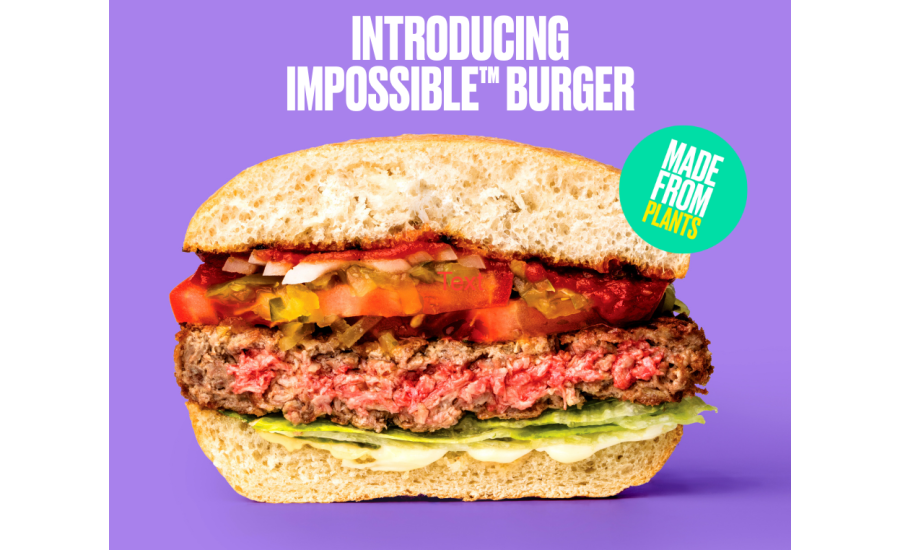 Plant-based hamburger from Impossible foods[/caption]
At CES 2019, for the first time ever, Impossible Foods' food was presented at an exhibition rather than an object.
And Impossible Foods becomes a leading company in ‘Food Tech’. The American business magazine 'Inc.' even selected Impossible Foods as the company that changed the world in 2019.
But most notably, Professor Brown used his biomedical experience to create a hamburger patty that surprisingly improved the flavor.
In this article, we looked at how Professor Brown, a gifted scientist, led the Impossible Foods to this point.
Prof. Brown, the son of an accomplished scientist, an American CIA agent, said that he traveled the world a lot when he was young.
He graduated from the University of Chicago.
He also graduated from medical school in Chicago and received his PhD in biochemistry from Chicago.
[caption id="" align="alignleft" width="452"] Professor Patrick O. Brown[/caption]
You must have done enough to study. He could have become a full-time doctor, but he liked life as a researcher more than being a doctor.
So he continues his biochemical research. In the 1980s, he did his postdoctoral work in the lab of the Nobel Prize winners in Physiology or Medicine Michael Bishop and Harold Barmus.
Here he helps map the human genome and does research on retroviruses.
In the 1990s, he invents a DNA microarray, commonly called a biochip, that is still used to study genetics today.
In recognition of these achievements, he was granted membership in the National Academy of Sciences, the world's most prestigious and prestigious academic body.
So when he took a sabbatical as a professor at Stanford in 2009, he didn't have to do anything new.
However, in his mid-50s, he (if successful) set out to achieve something greater than what he had achieved until then.
Besides, his grades so far aren't too bad.
Founded by Professor Tesla Brown of the food industry, Impossible Foods is called the Tesla of the food industry.
Just as Tesla is making internal combustion engine cars a legacy of the past and making electric cars, which are environmentally friendly future modes of transportation, Impossible Foods has one thing in common: making delicious plant-based meats that are eco-friendly and future-oriented.
It is also similar in that it added luxury to electric vehicles and plant-based meat.
Just as Tesla is synonymous with electric vehicles, Impossible Foods is also called synonymous with plant-based meat.
Unfortunately, it is also the case that they are not making a profit yet.
Impossible Foods' 2019 sales are expected to reach $90 million, but it's not yet profitable.
Perhaps it is inevitable that Professor Brown has been running Impossible Foods as if he were running a laboratory.
It is said that he hired the best scientists at the beginning of his founding and studied only for five years. They don't sell any products.
He spent nearly $200 million in investments by 2015, mostly on research and development.
In 2015 alone, 95% of our employees were scientists, and it was not until after that we started hiring management-related personnel.
Of course, all of the $300 million invested in 2019 went into R&D.
Impossible Foods has secured over $500 million in a funding round led by current stakeholder Mirae Asset Global Investments, indicating a rise in investor interest in fast-growing plant-based meat companies.
Estimated Revenue & Financials
- Impossible Foods's estimated annual revenue is currently $230.6M per year.
- Impossible Foods received $500M in venture funding in November 2021.
- Impossible Foods's estimated revenue per employee is $270,000
- Impossible Foods's total funding is $1.4B.
Employee Data
- Impossible Foods has 854 Employees.
- Impossible Foods grew their employee count by 52% last year.
- Impossible Foods currently has 124 job openings.
According to sources, Impossible Foods is planning to go public in 2022 at a valuation of $10 billion or more, however an IPO or SPAC merger would be "subject to market conditions."
Professor Brown also forbids the use of spreadsheets and Gantt charts that are commonly used in companies.
This is because spreadsheets are not well suited for modeling, and Gantt charts do not take into account the uncertainty of the project.
Because of this, the job evaluation site ‘Glasdoor’ sometimes talks about Impossible Foods like this.
“It’s a place that does meaningful work, but the management is the worst” he said.
“The CEO (Professor Brown) has good intentions and is a scientific genius, but he is a poor leader as a business executive.”
In fact, throughout 2019, Impossible Foods struggled to keep up with the rushing orders. This is because they have not been able to afford to have a supply chain because they have concentrated on R&D.
However, Professor Brown
“It was a little naive to plan, but I was able to learn from these failures,” he says.
Although there are problems with the management of the meat made by reverse engineering, the general consensus is that the Impossible Foods product 'Impossible Burger', which is made by hitting an astronomical R&D cost, is reliable.
That's probably because Professor Brown made use of his strengths as a biochemist and reverse engineered plant-based meat.
[caption id="" align="alignleft" width="476"]Reverse engineering is analyzing the finished product to identify and reproduce the basic design concept and applied technology of the product.
Professor Brown and his research and development team worked on essentially recreating real beef with plant-based ingredients.
First we took the beef and figured out all the elements in it.
In all, 4000 proteins, fats and biological mixtures were identified.
And I got a catalog of all commercially available botanical substances.
Soybeans as well as hemp and potato proteins were covered. We worked on replacing 4000 elements in beef with plant-based substances that have the closest flavor and texture.
The resulting product is the Impossible Burger. In this process, the taste of Impossible Burger was made similar to real beef.
‘Heme’ is found. Brown believed that heme gave beef its distinctive aroma and flavor.
Heme is found in both hemoglobin in the blood and myoglobin in the muscles.
All of them are of animal origin. However, heme is also present in leghemoglobin, which is found in the plant, soybean root.
The problem was that leghemoglobin was difficult to obtain in large quantities.
Because it took a huge amount of soybeans to extract heme from soybean roots to make meat.
Professor Brown eventually develops a method for mass-producing heme molecules by culturing yeast.
It's called synthetic biology, and it's said to be similar to genetic manipulation.
Despite some concerns, in 2018 the U.S. Food and Drug Administration (FDA) officially recognized the safety of heme.
This means that it is safe to eat. The main ingredients of Impossible Burger are soy, water, wheat, whole wheat protein, de-flavored coconut oil, and potato protein.
In addition, yeast extract, salt, soy protein isolate, konjac gum, xanthan gum and leghemoglobin contain less than 2%.
Checkout this video.
https://www.youtube.com/watch?v=n6U4H8WC9jg
Fierce Competition
Impossible Foods' competitors include companies like Beyond Meat, which makes plant-based meats from natural ingredients, and Memphis Meats, which makes lab-grown meats.
Beyond Meat went public in 2019 and is currently valued at $7 billion.
It is more popular than Impossible Foods, and it is a similar plant-based meat, but it is said that the taste is inferior to Impossible Foods.
[caption id="" align="alignright" width="484"]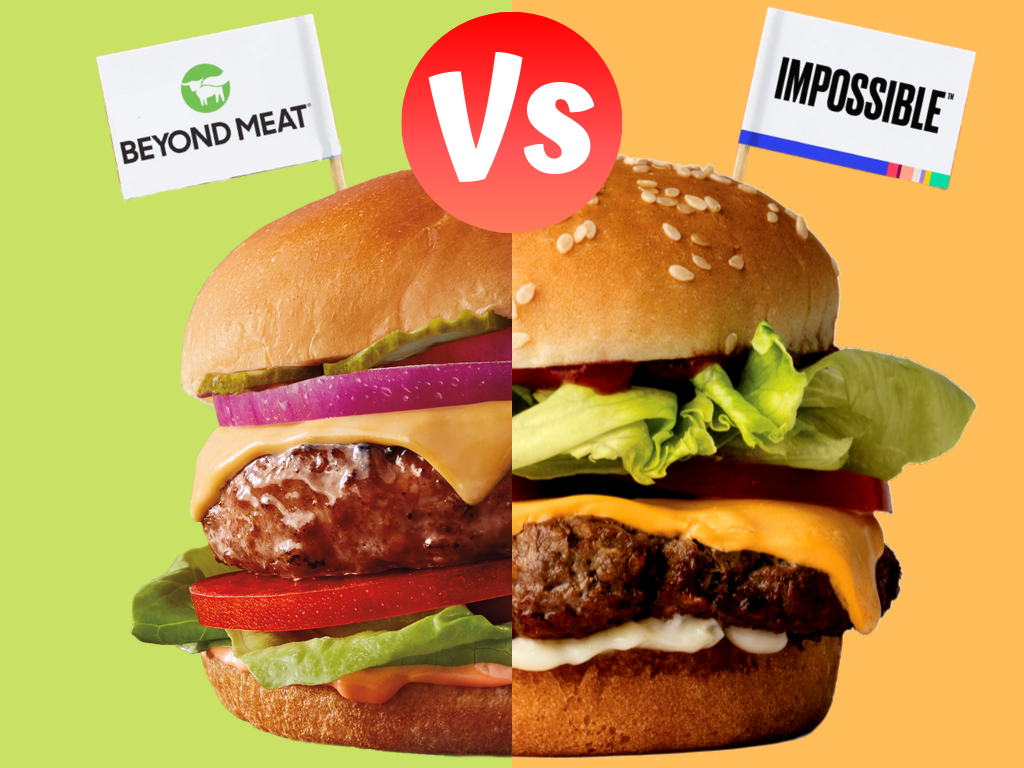 Beyond Meat vs. Impossible Foods Burger Showdown[/caption]
Professor Brown often downplays Beyond Meat's R&D budget ($9.6 million in 2018), saying it is too small.
Memphis Meats is literally made from lab-grown meat.
The problem is the price.
To make 0.45 kg of meat in 2017
It is said to have cost 18,000 dollars.
It is very expensive now, but it has the advantage that the price may come down a lot in the future.
The existing livestock and butchery industries are not standing still.
We are lobbying to not use the words “burger” or “meat” for fake meat.
Following beef, Impossible Foods also introduced plant-based pork earlier this year.
Last few years, plant-based meat brands received a total of 2.1 million engagements from articles written about them, with Beyond Meat taking the lead with 1.7 million engagements, as seen in the graph. Impossible Foods had a large degree of involvement in the previous year, with 500k, whereas the other five had a combined engagement of just over 100k.

Brown predicts that by 2022, the price of the Impossible Burger will be the same as real beef.
And by 2035, we have a bold goal of making all meat plant-based.
A manager like an environmental evangelist Professor Brown is often evaluated as an evangelist with a strong belief in environmental protection rather than a general corporate manager.
He doesn't just want to make a lot of money by selling a lot of plant meat, but he wants to make the animal meat unnecessary to save the earth's environment.
He started his business with a sense of mission. There are people who criticize the Impossible Burger as being nothing more than a simple processed food, but he doesn't care. Because he's looking at the bigger picture.
Looking at his consumption life, I don't think this evaluation is very wrong.
Impossible Foods is valued at $3-5 billion (about 6 trillion won), but Professor Brown still lives in the same apartment he had been living in since he was a professor at Stanford University, wears the old sneakers he wore during marathons, and is one of the cheapest electric cars. I drive a Chevrolet Volt that belongs to my side.
(Never Tesla)
 Impossible Foods Slashes at Grocery Stores[/caption]
I wonder if Professor Brown will be able to grow Impossible Foods into a solid company beyond a simple laboratory, whether human tastes will change, how expensive real meat will become in the future, and whether it will improve the environment.
I have a lot of questions. But the most curious thing is whether plant-based meat can be as delicious as real meat.

Comments
Post a Comment