How Mercedes-Benz 'S-Class' evaluated through 10 generations
Mercedes-Benz
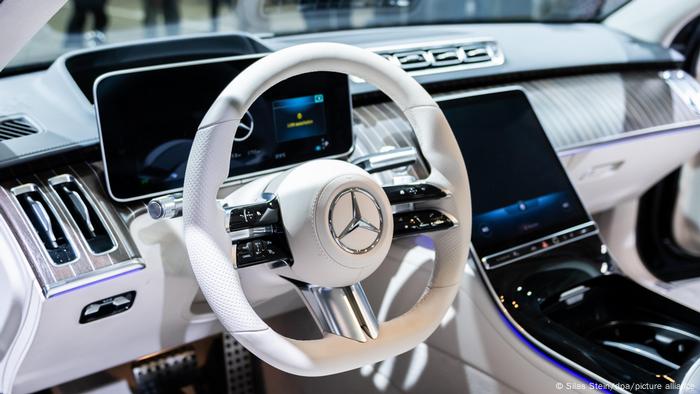
What images come to mind when you hear the word 'Mercedes-Benz'?
"It's the world's best luxury car!"
"It is a luxury brand and a symbol of wealth and honor."
Yes, there will be a lot of keywords. One such brand is Mercedes-Benz.
However, the view of Mercedes-Benz in the automobile industry goes one step further.
Not only is it a truly outstanding luxury car, but there is also the perception that it is an 'innovator who has led the industry as a whole.
Mercedes-Benz defined 'mobility'
[caption id="" align="alignright" width="550"]/inventor-karl-benz-sitting-on-benz-motorwagen-514911328-5c2137a6c9e77c00015a787c.jpg) Karl Benz seated on the Benz Motorwagen[/caption]
Karl Benz seated on the Benz Motorwagen[/caption]The first innovation was to prove 'mobility'.
In 1886, founder Carl Benz built the world's first automobile, and two years later his wife Berta Benz set out on the world's first long-distance drive.
Berta traveled 180km from Mannheim to Pforzheim in Germany in a car built by her husband.
made a round trip. This is the moment that proved that the car is a practical means of transportation.
* Bertha Benz's long-distance driving is also considered a successful early marketing campaign.
It was a surprising event for the people of the time. Wouldn't it be the same feeling as we are watching the next-generation mobility such as self-driving cars?
If you think about it, what determines 'luxury' is 'how innovative it is, not luxurious design or high-quality materials.
Generations of Mercedes-Benz 'S-Class'
Just as Chanel led a revolution in women's fashion with practical construction and design, Mercedes-Benz led the automobile industry.
The Mercedes-Benz S-Class
It is no exaggeration to compare the Mercedes-Benz S-Class and Apple.
The model at the center is the flagship sedan 'S-Class'. As it is a brand flagship (flagship), various new technologies researched and developed by Mercedes-Benz are concentrated.
The situation is similar to other luxury sedans, so why is the S-Class interested?
[caption id="" align="alignleft" width="491"] Mercedes Benz s class 1956[/caption]
The reason is simple.
Since its first appearance in 1951, the S-Class has sold over 4 million units over 70 years. The best-selling luxury sedan, the benchmark in this market.
The automotive industry is on the alert whenever a new S-Class is released.
If I had to compare it to the IT industry, I would say that it feels like waiting for Apple's new product launch.
I'm sorry to Apple fans, but I don't think it's an exaggeration to compare Mercedes-Benz to Apple.
It has had a huge impact on the automobile industry.
Among the technologies and functions that we take for granted now, there are quite a number of cases that were first implemented in the S-Class.
Let's go back to the past of the S-Class to see what it is.
From ABS to airbags, automotive technologies that started in the S-Class S-Class started with the W180 launched in 1953 and continues to the present day.
The S-Class, which dominated the 20th century, showcased various technologies that are now indispensable.
Mercedes-Benz W111
Innovation begins with the 2nd generation (W111) launched in 1959.
[caption id="" align="alignright" width="520"] 1959 Mercedes-Benz W111[/caption]
This car is now considered to have laid the foundation for automotive safety design. It was the first time I proposed the design concept of the ‘crumple zone’.
The crumple zone refers to a buffer zone to mitigate the impact of occupants in a car crash.
It is a technology that reduces the impact to the driver's seat by bending the front and rear of the vehicle as much as possible.
It is also the first car model to undergo a 'crash test' to confirm this.
It's not just Crumple Zone.
ㅇ 3-point seat belt
ㅇ 4-speed automatic transmission
ㅇ Air suspension
ㅇ Disc type brake This technology, which is still widely used today, first appeared in the second generation.
Mercedes-Benz W116
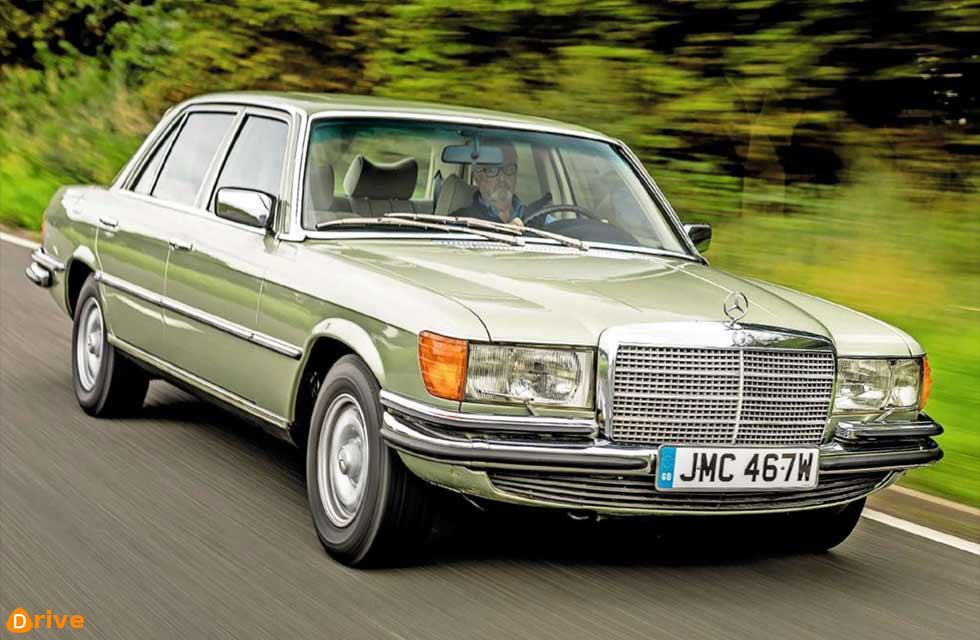
The 4th generation (W116), which first used the name S-Class, is also a model that is on the list of excellent cars.
This is because it is the world's first car model to apply 'ABS (Anti-Lock Brake System)'.
In the event of a crash, the design of the fuel tank was also changed to reduce the possibility of a fire. It was a model that emphasized the importance of occupant safety.
Mercedes-Benz W126
The 5th generation (W126), unveiled in 1979, was equipped with an airbag for the first time. Since it was a model that appeared during the oil shock, traces of it are found everywhere.
Plastic materials were used for various parts such as bumpers. The introduction of aerodynamic designs used in aircraft improved fuel economy by more than 10%.
Mercedes-Benz W140
[caption id="" align="alignright" width="375"]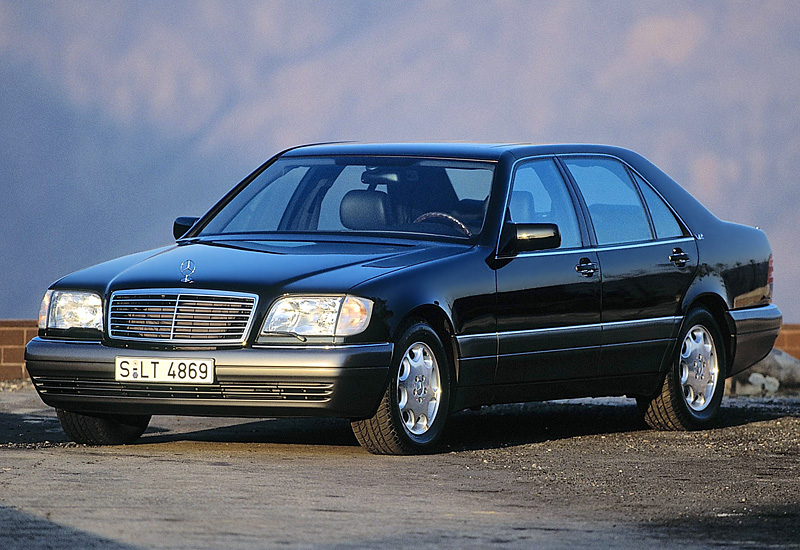 1991 Mercedes-Benz W140[/caption]
The 6th generation (W140) appeared in 1991. It is also known as Princess Diana's last car.
'ESP (body posture control system)', called the dream technology, was applied to this model for the first time in the world.
Through this, the stable movement was realized on various road surfaces.
Rear parking sensors, auto wipers, and navigation, which are now common, are also the first specifications applied to the 6th generation S-Class.
Mercedes-Benz W140
[caption id="" align="alignleft" width="526"] Mercedes-Benz W140[/caption]
The 7th generation (W220) S-Class, released in 1998, is the first model to be equipped with 'air suspension and 'active suspension'.
It is a technology that actively adjusts the damping force of the suspension and the height of the vehicle body with hydraulic pressure.
For example, when a crosswind blows at the exit of a tunnel and the vehicle body shakes, it detects this and strengthens the suspension to increase stability.
Before the 2000s, airbags were an option, and it was impossible to even dream of installing ABS on a compact car.
It took a long time for the technology applied to the luxury sedan, the S-Class, to be applied to other models.
Prepare for the era of autonomous driving
In the 2000s, Mercedes-Benz began to introduce systems essential for autonomous driving.
It is unknown whether it was introduced with the autonomous driving era in mind.
Mercedes-Benz W221
In 2005, the S-Class, which entered the 8th generation (W221), increased the number of electronic systems in earnest.
The biggest change is how the transmission works.
[caption id="" align="alignleft" width="1280"]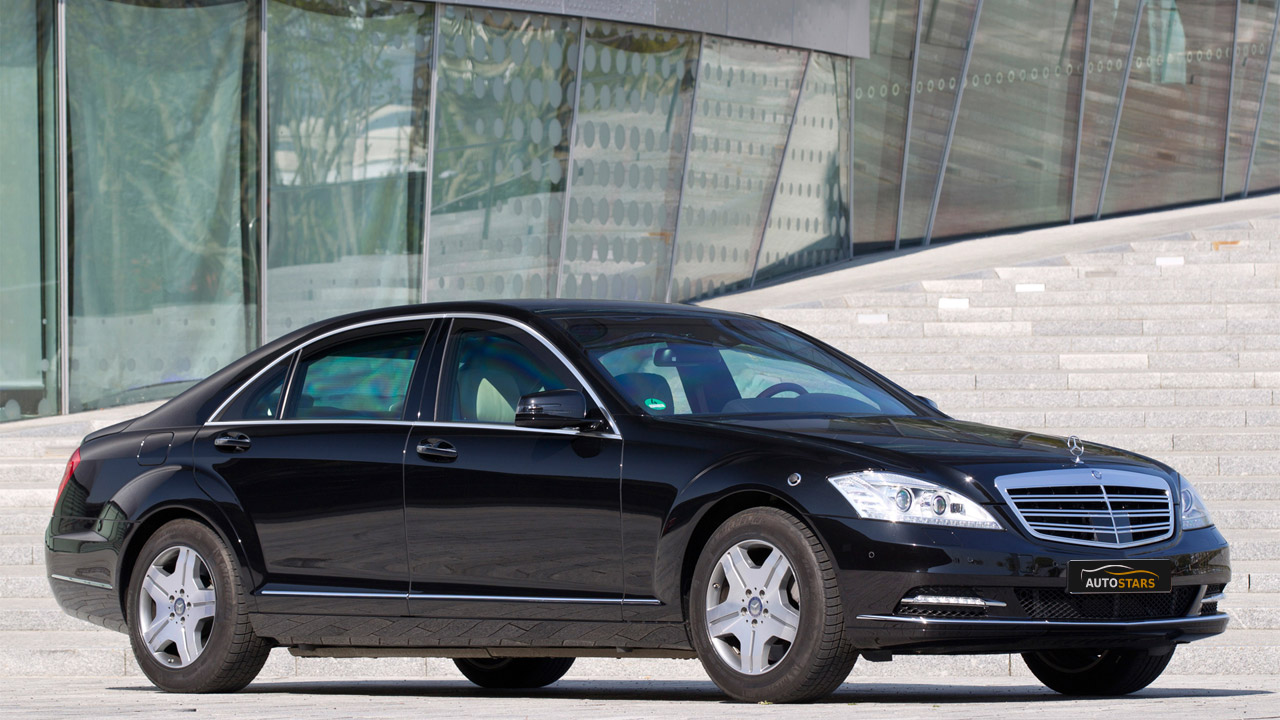 Mercedes-Benz W221[/caption]
The existing automatic transmission, which operated mechanically, has been converted to an electronic type that operates the 'column gear' attached to the side of the steering wheel.
Since then, column gear has been expanded to all Mercedes-Benz lineups,
Even Tesla did this. An 'active driving assistance system', the so-called 'ADAS', was also introduced.
Although even the concept of ADAS is unfamiliar, systems that will continue to be maintained and developed in the future are beginning to be applied.
'Pro Safe', which slows itself down to maintain a safe distance when the car in front is too close;
There is 'Night View Assist, which improves nighttime visibility with infrared headlamps.
Mercedes-Benz W222
[caption id="" align="alignright" width="1920"] Mercedes-Benz W222[/caption]
The 9th generation (W222), unveiled in 2013, has had a profound impact on the latest automotive technology trends.
This is because the 'temporary autonomous driving function' was first proposed.
Faster than Tesla Autopilot. This system is largely
It is a combination of 'Distronic Assist Plus', 'Steering Assist' and 'Adaptive Cruise Control'.
It has come to the level of adjusting the distance from the vehicle in front with numerous sensors installed in the car, recognizing the lane, and turning the steering on its own.
'Magic Body Control', which detects the road surface 500 meters ahead through a stereo camera and adjusts the suspension, was also introduced for the first time.
‘Belt bag’, an airbag with a built-in seat belt, and ‘Brake Assist Plus’, an emergency braking system that recognizes even pedestrians and bicycles, have also appeared for the first time.
The 9th-generation S-Class also has a unique record of being the first mass-produced car to use no light bulbs at all.
What is the new technology applied to the 10th generation S-Class?
Mercedes-Benz W223
[caption id="" align="alignleft" width="1280"] Mercedes-Benz W223[/caption]
The 10th generation S-Class (W223) was unveiled.
Safety, especially the 'preventive' safety technology, is notable.
Driving assistance systems and safety technologies have been strengthened, and in particular, the scope of air suspension has been expanded with the concept of taking responsibility for ride comfort and safety.
The Magic Body Control introduced in the 9th generation has evolved into the 'e-Active Body Control Suspension'.
20 sensors, cameras, and 5 processors read the road surface more than 1000 times per second to adjust the riding comfort.
When it detects an unpaved road, it raises the body and reacts smartly enough to tilt a part of the body when it is on a curve.
The rear seat airbags have also been improved. The airbag inflation pressure is automatically adjusted according to the weight of the occupant and whether or not a car seat is installed.
‘Impulse Side’, which detects side impacts, was also introduced for the first time.
The radar sensor on the side of the body calculates the impending collision situation and raises the body just before the collision to minimize damage to the occupants.
It is the concept of absorbing impact by hitting an object against the lower body, which is the hardest part of the car.
It even has a technology that uses the air cushion built into the seat to push the occupant as far from the point of impact as possible.
Driving assistance systems have evolved from Level 2 to Level 3 of autonomous driving technology.
The autonomous driving technology stage is divided into 6 stages from level 0 to 5 according to the criteria proposed by the American Society of Automobile Association.
Level 2 is 'partial automation' where humans monitor the driving environment, and level 3 is 'conditional automation, where the system monitors the driving environment and requests the driver's intervention when necessary.
Depending on the country, stability has been improved to the extent that you can leave your hands completely in some sections.
Looking back on the history of the S-Class, I think it is innovation itself.
It is also shocking that the technology that was once only applied to these high-end sedans is now installed in small and medium-sized cars for granted.
Mercedes-Benz has been leading automotive technology trends for over 60 years with its flagships.
Competitors didn't stand still, but it took quite a while to implement.
The technology of the 9th-generation S-Class has been a great inspiration to automakers' research and development for about seven years.
In the next 7 years, how about watching closely what technologies the competitors, stimulated by the 10th generation S-Class, will show off?
Read Also: Honda is throwing away the Gasoline-Engine? 1, France’s Future-Leading Automobile Companies: Renault Vs Peugeot

Comments
Post a Comment