How Founders with Jobs disease and disobedient employees are tackling big organizations!
How Founders with Jobs disease and disobedient employees are tackling big organizations!
“My name is Michelle, who works as a design team leader at ‘Aah’, a real estate app operator.”
"I have one concern these days. The CEO of our company has Jobs' disease."
"What is Jobs disease?"
[caption id="" align="aligncenter" width="438"] Jobs disease of thinking[/caption]
“Steve Jobs (STEVE JOBS V/S TIM COOK – APPLE’S STRATEGY TURNOVER), portrayed in the press and in popular culture, was closed, nervous and self-righteous, but he had a genius for management and product planning, and he showed tremendous momentum in everything.”
"It's just that I'm clumsy in following this. Without the ability to do it."
When it comes to work orders, I just urge them to 'do it quickly' or 'do it once' without explaining the background and justification."
"From my point of view, the CEO shouts 'innovation', 'creative', and 'edge' only in words, because he knows very little about design."
“You should be able to respect and delegate experts and working people, but you are not.”
"There was a time when I said that I did not understand why I was doing this, and I talked a little bit back."
"The answer to this? I don't have time to explain, so just do it."
"He doesn't know much about design, but he has a sense of service and a quick response to customer needs, so you can do whatever he asks you to do."
"Ego.. the direction itself is wrong.. Actually, I know that the CEO is busy."
“But if we cut out the time for unnecessary meetings and meetings with investors and the press, things will be a little better.”
“Actually, I was at a well-to-do big company and came out to do what I usually want to do.”
“But competing with each other, slandering and politicizing each other is no different from large corporations.”
[caption id="" align="alignnone" width="548"] Employee autonomy in the remote workplace[/caption]
“I said that I would guarantee autonomy as much as possible in the interview, but it is not kept at all.”
“And the problem is that while the work and labor intensity increase over time, the salary and benefits remain the same.”
“I can count on my fingers the last time I left work before 7 o’clock after coming here.”
"I can't count the number of times I've been to work on the weekend. ㅠㅠ"
But does it mean that things are going effectively?
Is there any chance that I will always be on a tight schedule and always work too hard?”
“The talk about stock options and stock compensation is likely to come up soon, but there is no sign of that.”
"I can't confirm it right now, but I said I'll go and take care of it later so that I won't be upset, but when I was negotiating my salary not long ago, things were completely different."
"Whew"
"The service usage rate has been declining since fortress, and I'm seriously thinking about moving to a competitor because I'm afraid I'll go bankrupt if I don't receive additional investment."
"I was drinking a can of beer in the room a while ago and thought, "If that's the case, why did I leave the company, I'll just keep going."
"What's the matter?"
"My name is Michael, who is the CEO of 'Aah', a real estate app operator."
"It's been 4 years since I started the company."
"Looking back on the past, it wasn't bad. We raised hundreds of thousands of dollars in three rounds of investment, and now we have nearly 100 employees."
"It's not at the stage of making good money, but considering the fact that the survival of a startup itself is opaque, it's pretty good."
"But I have one concern these days. It's that the employees don't listen to me."
“Startups (Read more on: STARTUP ADVICE OF Y COMBINATOR FOUNDER PAUL GRAHAM) have to make quick decisions and move quickly, saying that speed is life, but they live with excuses that they can’t do this way and can’t do that.”
https://www.youtube.com/watch?v=bNpx7gpSqbY&ab_channel=TED
"In a hurry, just do what I tell you to do, and if you do this, you'll kill your face as if you're arguing."
"Realistically, there are a lot of restrictions, don't I know that? Even if you take all of them into consideration, we're going to do it because we think it's the best option."
“In the beginning, there were few people and the office was small, so we could meet and talk often, but now that we can’t do that, it feels like the walls are getting higher and higher.”
Disobedient Employees
“Not long ago, I went to the company evaluation site, Captain Planet, and looked at the company’s reputation.
"Many overtime work is unavoidable. Startups are in a crisis of survival right now and have to compete with large companies in the long term."
"For David to defeat Goliath, he must move more and move faster."
"It's hard to see that there are a lot of salary issues, but I think it's at least the industry average."
“How about handing out some stock options? I just want to do it right now.”
"But! It's a more difficult problem than you think. Because stake dilution takes place.
It is burdensome to defend management rights later, and it is difficult to get consent from investors."
 Insubordination In The Workplace[/caption]
"Instead, if the company gets better, I'm willing to give in any way."
“Recently, some employees have moved to a competitor with key company information, so I am thinking about whether or not I should file a lawsuit.
“In the past, senior founders told me not to trust people too much, but I don’t know why these words keep coming to mind these days.”
"What's the matter?" The media and popular culture tend to ideally portray startup culture.
Young, free, equal, transparent, complementary, de-authoritarian, strong bond,
It allows you to make the most of your individual abilities, improving both your abilities and your career in a short period
When all goes well, everyone can be rich and so on.
However, there is a huge gap between the ideal and the reality, and it is not uncommon for both employees and founders to distrust each other.
Why?
This is because, basically, both the founders and employees have heard the startup culture by ear, but have never actually experienced it and created it.
And the situation in which they are hung up on survival and being chased by competition often triggers intense conflict and selfishness.
If the morality of the executives and employees is low, this problem is bound to burn even more. Fortunately, even if you grow up, yes.
The fact that the company grows in size in a short time makes the verification process weak in the hiring process and hinders the formation of a sound organizational culture.
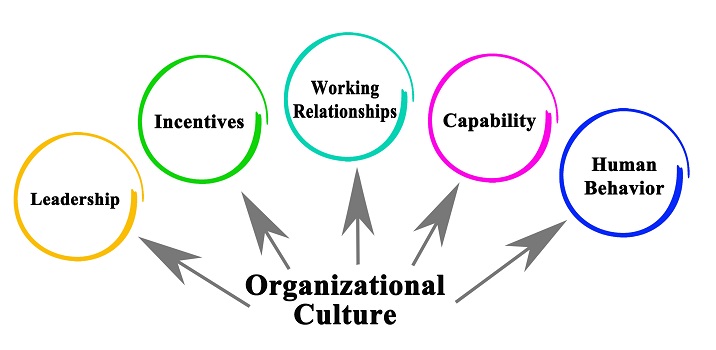
Overcoming Jobs Disease by Organizational Culture
Taken all together, startups may be far more conservative and backward than large corporations.
Both organizational culture and labor-management relations! So, is there no alternative?
Let me give you some ideas.
1. Achieve similar goal
There must be a consensus on the direction of the company. It is the backbone of organizational culture.
It is a story that the founder or founding member (WHAT IF FOUNDER RISK AND EMPLOYEE RISK BECOME SIMILAR?) must agree and agree on why the company was created and how to lead the company.
It would be nice if it was as specific as possible, and if enough time was spent in the communication process.
If this is not done, conflicts and confrontations will appear on every case.
2. Transparency
Minimize information asymmetry in the recruitment process. Employees should find out about the company atmosphere and the founder's tendencies before hiring.
The company also needs to find out about the skills and tendencies of its employees before hiring, regardless of any means.
What if they don't match? we shouldn't meet Even if it doesn't fit, what if we have to meet?
We need to acknowledge the differences and clarify the traffic management for future disputes.
3. Strict Implementation of Labor Contracts
Labor contracts must be made in accordance with laws and principles. I think the era of paying passion and forcing you to work overtime and overtime is over.
Even if a high salary is not guaranteed, both the salary system and the work environment must be set according to laws and principles, and if you are not confident in doing so, it is correct not to hire a company in the first place.
4. Job Stability
We try to understand each other's point of view.
Founders are heartbroken whenever they see performance pressures and cost items being chased by an uncertain future.
Employees want a more relaxed and stable work environment.
If there is a conflict, it is necessary to think from the other side's point of view at least once.
We obviously know each other's circumstances, but we shouldn't ask for more than that.
5. Correspondence in growth of company and salary
Match the growth of the employee with the growth of the company. The two can last a long time when the company raises the skills and salaries of its employees and the employees increase the company's sales and profits.
If the company can't keep up with the growth of its employees or if the employees can't keep up with the growth of the company, they have no choice but to break up.
6. No bureaucracy
The work is based on delegation and performanceism. Looking at the organizational management behavior of innovative companies such as Google, Netflix, and Apple, it is an atmosphere that actively avoids the bureaucracy.
Learn more about:THE NETFLIX STORY – HOW DID NETFLIX START?
It's not because it's cool. Because it incurs high communication costs, the climate becomes conservative, and the pace slows down.
And it is difficult for the members of the organization to have a sense of motivation and responsibility because of the idea that they are parts of themselves.
In particular, the importance of work and delegation is growing as the market change cycle is getting faster and the skill gap between individuals is widening.
Even if you are asked to take responsibility later, let's not meddle in everything.

7. Have a clear decision-making structure
Even if discussions and discussions take place freely, there must be someone to make a decision and make a decision. Crew members, even if they don't like it, must follow it to avoid capsize.
8. Information communication
We have a transparent information sharing structure. At the very least, this means that members of the organization need to know how the company works and what's hot.
In order to see the same direction, someone has to point a finger in the direction. That's why TGIF (Google Plenary Meeting), Hackathons, Developer Conferences, etc. exist.
9. Qualified HR
We recruit management and HR experts. It is to learn the know-how and methodologies from those who have already run large organizations.
Just like Steve Jobs got John Sculley, like Larry Page with Eric Schmidt, like Mark Zuckerberg with Sheryl Sandberg! Of course, not all of them have a happy ending, but the fact is that it is one of the shortcuts.
10. Be wary of too fast tissue expansion.
As mentioned earlier, growing in size within a short period of time will weaken the verification process in the hiring process and hinder the formation of a sound organizational culture.
It means that no matter how fast you grow, you need some tempo adjustment.

Comments
Post a Comment