Elon Musk's Tesla
Elon Musk's Tesla
[caption id="" align="aligncenter" width="940"] Photo by WallpaperAccess[/caption]
One of the secrets of the ‘Tesla Empire’ is ‘vertical integration’ of business.
There is absolutely no need to think hard about the word vertical integration.
Simply put, you do what you need to do for your business.
Tesla(Why Elon Musk Chose Edison as a Role Model) is making electric vehicles as a platform to provide various mobility services to consumers.
Of course, the cause for the global environment is also important, but in business, it can be seen that the focus is on revenue from mobility services rather than profits from vehicle sales.
In that sense, Tesla has its own closed system in the entire process, such as consumer → operating system → cloud center → OTA (over the air, wireless upgrade) → ECU (electronic control unit) → AI semiconductor → electric vehicle → charging station → communication. We are creating a vertically integrated structure.
Just as Apple(Epic Games Vs Apple) attracted customers through its own hardware/software integration ecosystem, Tesla can also attract more customers through this closed vertical integration structure.
Only then will it be possible to provide services that seamlessly connect all user experiences.
But what about other automakers?
It only makes 'electric vehicles'.
Tesla's Vertically Integrated Structure
[caption id="" align="aligncenter" width="1200"] Photo by Loup Ventures[/caption]
If you look at Tesla's vertically integrated structure, it means that existing automakers are only responsible for one part of this structure.
Even in that electric vehicle, high-level wireless upgrade and centralized electronic control like Tesla are not possible, so we are in a hurry to change the design and follow.
But that's it. This vertical integration was an obsolete concept in the automobile industry until a few years ago.
Vertically integrating and managing all processes leading up to the production of the final product for an automobile company was considered unacceptable.
In the past, a pyramid-type vertical integration structure that links the parent company to the 1st, 2nd, and 3rd tier suppliers (parts companies) was the competitiveness of automakers.
However, as the technology to be applied to automobiles increased rapidly, this structure began to become a burden.
It was difficult to respond quickly for companies that were accustomed to only obeying instructions within the boundaries of their parent company.
Therefore, recently, automobile companies have been using strategies to increase product competitiveness by fully utilizing the horizontal division of labor.
The Automobile Design Philosophy
[caption id="" align="aligncenter" width="604"]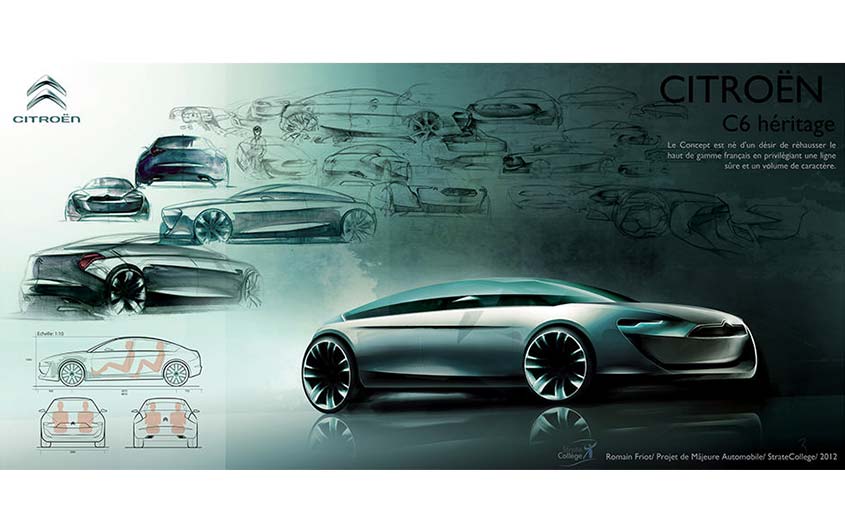 Photo by Strate School of Design[/caption]
The automobile(geek who shook the automobile industry a century ago) design philosophy was also in the process of changing from the existing closed type to an open structure.
The trend was to standardize and simplify automobile design so that different automobile companies and parts makers could cooperate smoothly.
The trend has been that it is more efficient to have a horizontal division of labor between partners than to try to do it all alone.
But Tesla is the exact opposite. This is not a horizontal division of labor, but an unconditional vertical integration.
Horizontal Division of Labour
[caption id="" align="alignnone" width="960"] Photo by SlidePlayer[/caption]
Not so long ago, the automobile industry said that it was necessary to create a horizontal division of labor that works with partners, rather than a vertically integrated structure that can be done alone.
To understand why, just look at what stage the industry is now in the stages of inception, development, and maturity.
Today's traditional automobile manufacturing industry has matured to what it has been in the past 100 years, so there's no need to do it all alone.
It would be more efficient to work in the form of division of labor with each competitive place.
That way you can make the car a little cheaper and get more sales profit.
In other words, from the point of view of selling cars and maintaining the business with the remaining profits
Henry Ford and The Rouge Factory
It is correct to go with a horizontal division of labor. However, in the early days of this automobile manufacturing industry, vertical integration exerted tremendous power.
It started as a factory in Rouge, Michigan, built by Henry Ford 100 years ago.
The Rouge Factory was the largest industrial complex on the planet at the time, wider than the area of Yeouido.
It was the perfect vertical integration of automobile manufacturing, where iron ore becomes automobiles.
It was a really groundbreaking concept at the time.
The automobile was just entering the era of mass production, and it was difficult to find an answer to how to make a car in mass more efficiently and inexpensively anywhere in the world.
In the end, by consolidating everything in one place and seamlessly connecting the manufacturing process, we were able to get the most out of it.
In other words, in a situation where no one had yet made the right way for automobile manufacturing, Henry Ford showed the way through the seamless vertical integration of manufacturing.
Henry Ford Vs Elon Musk
[caption id="" align="alignnone" width="1000"] Photo by FreightWaves[/caption]
Let's compare this to the mobility services industry opened up by Tesla.
Experts believe that the mobility service market will ultimately reach $70 billion per year.
I assume it will be open.
It's a huge market, almost three times larger than the $25 billion a year in auto manufacturing, the largest of any single industry.
In this market, not only automobile companies, but also IT platforms, transportation, e-commerce, telecommunication, content, insurance, and all kinds of companies are paying attention to this market.
Who Will be Chosen By Consumers?
Consumers do not use services separately for each company.
Just as consumers fall in love with a smooth service that connects all products while using Apple products, it is the same when using a car as a service platform.
In order to be selected by consumers, all services must be connected like water.
The only company in the automotive industry that can do that is Tesla right now.
The reason Tesla has no choice but to do so is that the market is still in its infancy.
Just like when Henry Ford completed the vertical integration of automobile manufacturing 100 years ago, Elon Musk(Jeff Bezos Vs Elon Musk) is also creating a vertical integration structure on his own because no one has yet shown the correct path in the mobility service market.
The Reason Behind Rouge Factory
[caption id="" align="aligncenter" width="4446"]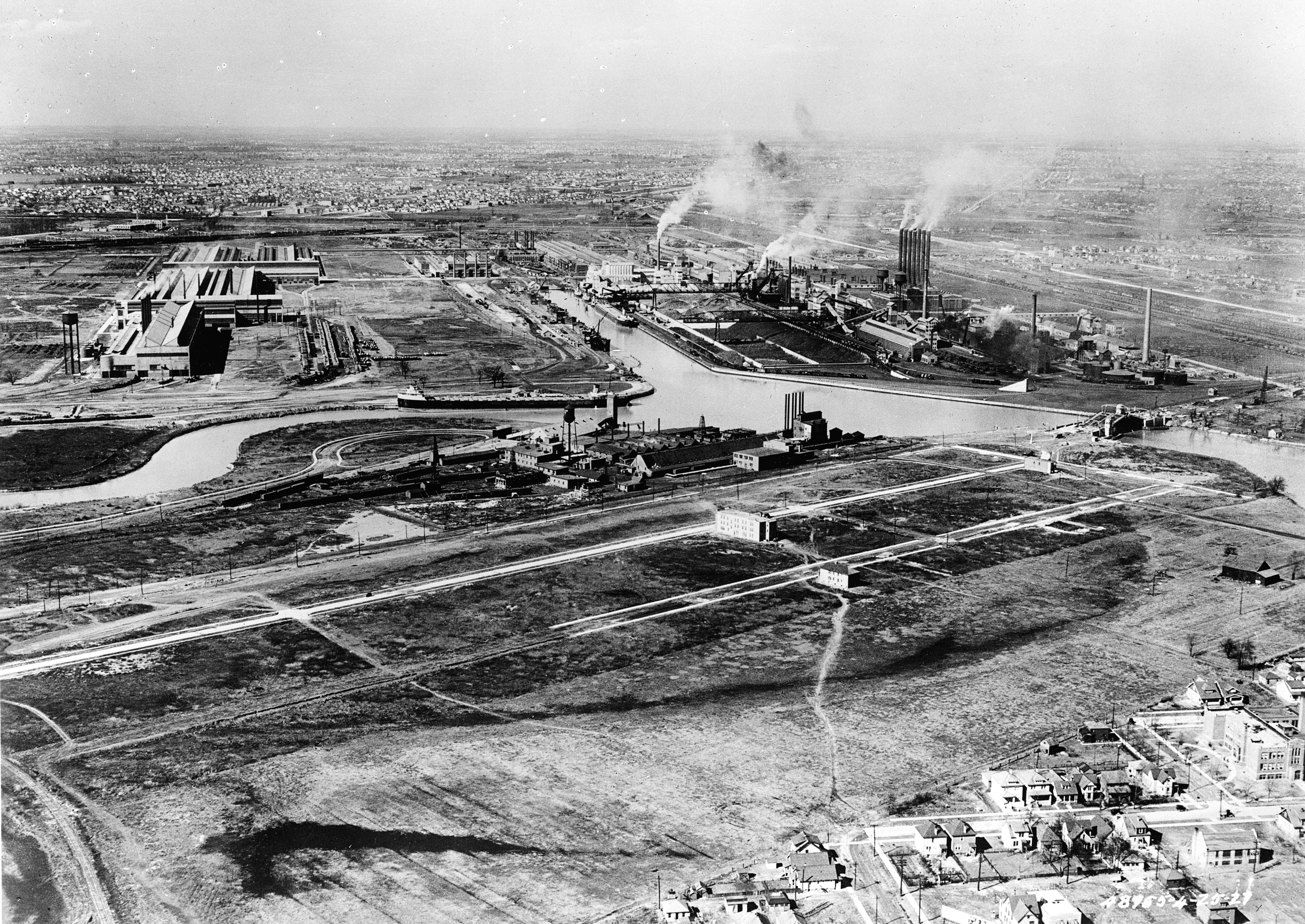 Photo by Wikipedia[/caption]
The reason Henry Ford built the Rouge Factory was to find the most efficient way to make a car without being bound by outside players, at the beginning of the era of mass production.
In order to do that, you must have seen that the best way to build all your abilities yourself, that is, to create a vertically integrated structure.
So is Musk now.
The mobility service industry is just beginning.
In such a situation, if Musk is to build his own mobility empire, he needs to carry out his business most efficiently and quickly without being influenced by any external forces.
What's Needed At This Time is The Ability to Vertically Integrate the Business
That's why American auto industry experts consider Elon Musk to be the second coming of Henry Ford.
This is because the vertically integrated structure of the mobility service business that Musk built is reminiscent of the perfectly vertically integrated structure of automobile manufacturing that Ford showed at the Rouge plant 100 years ago.
I recently interviewed Sandy Monroe (71), CEO of Munro & Associates, who is famous for his YouTube video analyzing the competitiveness of Tesla Model 3 and Model Y.
Monroe also compared Elon Musk's leadership to Henry Ford.
"We haven't seen a leader like this in a long time."
“Isn’t it like Henry Ford and Charles Kettering if they were in the automobile industry before Musk?”
(Ford made mass production systems, and Kettering led GM R&D from the 1920s, developing innovative technologies such as electric ignition devices.)
Kettering said, "Without preconceived notions (ordinary people can do amazing things)
I even left a comment.)
"100 years have passed since the two came out"
“Maybe every 100 years, someone shows up and changes everything. Maybe it’s Musk.”
For more articles like these, please visit Ulzzang Korea A New Way to Knowledge

Comments
Post a Comment