7 Propositions That Seem True at First Glance
7 Propositions That Seem True at First Glance
Let's start with a quiz. Is the following true or false?
1) The more people work, the better the performance.
2) A charismatic CEO who appears frequently in the media produces good results.
3) An open office facilitates communication between employees.
4) People with high grades appear in society and succeed.
5) A life without boredom is highly productive.
6) The wider the choice, the better.
7) Those who give more than they receive from others will fail.
The above seven propositions, which seem to be all true at first glance, have been found to be false as a result of research.
No joke. Let's take a look one by one.
1) The more people work, the better the performance.
[caption id="" align="aligncenter" width="982"] Photo by The Independant[/caption]
Of course, there are people who work a lot and have good results.
However, it has been shown that working more than 50 hours a week reduces engagement.
If you work too much, you are prone to burnout syndrome.
2) Frequently appearing in the media
[caption id="" align="aligncenter" width="2800"] Photo by In Between of The Two Seas[/caption]
A charismatic CEO produces good results.
Rakesh Kurana, professor of business at Harvard University, in an article titled “The Curse of Superstar CEOs,” pointed out that charismatic CEOs who present a corporate vision surprisingly often do not perform well.
Studies have shown that when a CEO appears on the cover of a magazine, the company's performance declines.
3) An open office facilitates communication between employees.
A Harvard Business School study found that face-to-face contact between employees dropped by 70% when changing the office structure to an open, non-divided space.
4) People with high grades appear in society and succeed.
Several studies have shown that grades and job performance are slightly correlated in the first year of college, but disappear afterward.
5) Life with boredom is highly productive
[caption id="" align="aligncenter" width="1200"] Photo by Harvard Business Review[/caption]
Boredom gives your thoughts room to develop. It is said that when a person bruises or sits idle, a network called the “default mode” in the brain is activated.
At this time, the human brain begins to think most creatively and solve problems by letting the imagination run wild.
6) The wider the choice, the better.
Too many choices can lead to a choice, or decision impediment, that interferes with making a choice.
There's a famous jam sales experiment. When we set up a stand with 24 jams and a stand with 6 jams, people found more places with 24 jams, but the ones with only 6 sold much better.
With so many to choose from, you don't know which one to choose.
There are many things in this world that go against our common sense.
7) "Those who give more than they receive from others will fail.”
[caption id="" align="aligncenter" width="850"]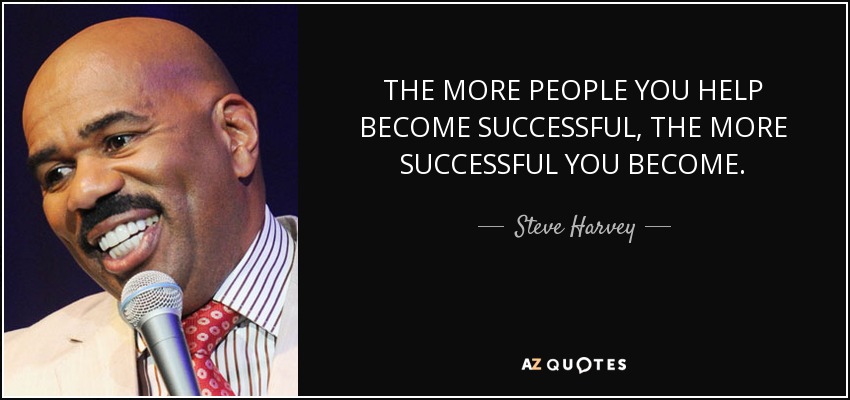 Photo by AZ Quotes[/caption]
That this is not true is still not well accepted in the heart.
It's probably because there's a strong belief that strong people who are a little bad and take advantage of others are successful.
But number 7 is also not true.
According to Adam Grant, a professor of organizational psychology at the University of Pennsylvania’s Wharton School, the best-selling book ‘Give and Take’, a giver succeeds in helping others, sharing knowledge and information, and yielding their interests for others, even if they are busy.
Simply put, people who give more than they receive are successful.
It does require a bit of calculated ‘selfish altruism’.
The person at the opposite end of the giver is called a ‘taker’ who wants to receive more than he gives, and the person who gives as much as he receives is called a ‘matcher’.
The Last Dance
[caption id="" align="aligncenter" width="611"] Photo by What's New on Netflix[/caption]
ESPN's latest hit 10-part documentary called 'The Last Dance' streamed via Netflix (The Netflix Story)
Watching 'The Last Dance' reminded me of this 'Give Take' I read a few years ago.
'The Last Dance' is the story of Michael Jordan leading the Chicago Bulls to his last NBA championship in 1997-98.
It's not just a season summary. It contains much more than that.
Although Jordan is the main character in The Last Dance, it also tells the story of then manager Phil Jackson and the team's key players such as Scotty Pippin, Dennis Rodman and Steve Kerr.
It also provides an in-depth look into the lives of Jordan and his teammates, traveling back and forth from the 1960s through the 1990s.
who is Jordan By far (and probably in the future…) he is the greatest basketball player of all time and the greatest basketball player on earth.
In star players alone, there are only four players who have won six of America's three major professional sports leagues (football, baseball, and basketball) over the past half century. No player has won more than 6 titles.
In basketball we have Jordan, Pippin and Kareem Abdul-Jabbar, and football quarterback Tom Brady. Even the famous Magic Johnson, the late Kobe Bryant, and Derek Jeter have won only five (?) titles.
What makes Jordan's achievements even stronger is that he's won six in seven years.
Except for a time when he retired midway and briefly switched to baseball, between 1991 and 1998 he had won his third straight twice.
Abdul-Jabbar and Brady's six-time victory spanned 18 years.
The Last Dance focuses on Jordan's incredible ability as a player and his desire to compete, which he has to win no matter what.
The way he seemed to fly on the court was beautiful, and seeing the opponent who couldn't even pick a bone if he touched him was exasperated.
However, Jordan's appearance in the process is very self-centered and self-righteous.
Steve Kerr even punched Jordan in the face when he couldn't stand the bullying.
His teammates say he has only two emotions: anger and frustration.
He thought it was like a 'basketball machine'. Jordan always made fun of the short stature of general manager Jerry Krauss, whom he didn't get along with, and if the opponent showed the slightest bit of disrespect for him, he would smash him in the middle of a match.
That doesn't mean Jordan is a bad person.
But he was by no means a role model. He may see himself as a competitive basketball player, but he has also said that he is not a great role model.
He wasn't even a leader.
He was a dictator who did not provoke the team, but rather incited fear.
7 Things All Great Team Captains Have in Common
[caption id="" align="aligncenter" width="620"] Photo by World IP Review[/caption]
‘Captain Class: The 7 Hidden Powers of Leaders Who Made the World’s Greatest Teams’, written by former sports reporter Sam Walker of the Wall Street Journal, covers all sports and analyzes the 16 best teams of all time and analyzes their commonalities.
Cuban women's volleyball team (1991-2000),
San Antonio Spurs (American professional basketball, 1997-2016),
Barcelona (Spanish professional football, 2008-2013) and others were included.
These teams had one thing in common.
It wasn't a great coach, not a great manager, not a great player.
It was a team led by an outstanding captain. The captains of 16 teams, including New York Yankees' Yogi Berra and Barcelona's Carles Puyol, were analyzed to have the following 7 things in common.
1) Great persistence and concentration on winning
2) The fighting spirit that even plays rough enough to be close to dirty play
3) Don't hesitate to do trivial things that no one appreciates behind the scenes
4) I am not good at interviews or speeches, but I am good at practical and democratic communication
5) Motivate colleagues with actions
6) Belief that says something and protects colleagues even if it becomes a problem
7) Perfect emotional control
It's a shock that the Chicago Bulls of the 1990s, considered one of the best teams in history, aren't on this list.
Is Jordan Really That Good?
[caption id="" align="aligncenter" width="1800"] Photo by The New York Times[/caption]
According to the author, Jordan was just an 'idol' and not a 'Captain Class Leader'.
Perhaps the only thing Jordan has among the seven characteristics of captains is ‘extreme tenacity and concentration on winning’.
But the world looked at Jordan, who was too good at basketball, to be more than just a player.
He was okay with being a Jordan even if he played self-righteously, and even if he pushed his teammates badly, he was forgiven because he was Jordan.
Despite the fact that in the team sport of basketball, passing is natural, when Jordan occasionally passes to a teammate with a no-mark chance, applause poured in.
So Jordan's appearance in 'The Last Dance' is absolutely stunning as a player, but a bit disappointing as a human being.
He only needs a basketball player to be good at basketball, so he might ask why he's talking about the human side.
But no matter how athletic he is, the player will one day retire
Then his greatness as a player is gone and the other side is bound to come to the fore.
Gone are the days when you had to run around alone like a solitary general.
would it be different
Jordan's post-retirement appearance is pitiful.
Jordan's Induction into The Hall of Fame
[caption id="" align="aligncenter" width="550"] Photo by NBA.com[/caption]
When he was inducted into the Hall of Fame, he thanked only a few and slandered those who doubted him.
As a player, he insisted that more of the club's revenue should go to its players, but after becoming the owner of NBA club Charlotte Hornets, he has increased his share of the club even more.
His ability to recognize talent is also reduced.
Jordan, who became president of the NBA's Washington Wizards, picked Kwame Brown as the first overall pick in the 2001 draft.
He jumped into the pro stage right after graduating from high school, and he performed too poorly for an overall first-place pick, making it one of the worst draft picks of all time.
He played over 500 games in 10 years in the league, averaging under 7 points and 6 rebounds per game.
But Jordan doesn't give up on him. After the acquisition of the Charlotte Hornets, Brown returned in 2010.
He didn't want to admit that his first rookie nomination was a failure.
Brown's playing time increased, but his performance did not improve.
Professor Adam Grant talked about Jordan's appearance in 'Give and Take'.
“Giver would have admitted his mistake and moved on, but Jordan was still trying to get his money back from a failed investment,” he said.
Besides Brown, Jordan's draft picks were problematic. The players we traded didn't do very well either.
Naturally, the Hornets, which Jordan owns, have poor performance.
Since 2010, when he became the largest shareholder, the Hornets have only made it to the playoffs twice.
That's why Jordan is called one of the worst owners.
It's amazing how a person who can't lose can endure.
Life is About 'Give' and 'Take'
[caption id="" align="aligncenter" width="620"] Photo by Happify[/caption]
It is true that Jordan, who performed outstandingly as a player thanks to his special abilities and strong mental strength, has moved on after his retirement.
That's because he has a 'taker' element, not a 'giver'.
Collaboration is important in today's society.
It is a world where you have to coach your juniors when you go up to the top after getting a promotion after joining a company.
I can't do my job alone because I'm good, and I can't.
The more you do this, the more you have to be a giver. encouraging his colleagues and juniors
Moving forward together is important. Proposition 7 of the quiz again
Let's go back to "those who give more than they receive from others fail".
It is true that there are many people who fail because they love people so much that they just give.
However, it has been shown that successful givers are not only altruistic but also active in pursuing their own interests.
However, I do not lose sight of the big picture until the end, that I succeed only when others succeed. That is why ‘selfish altruism’ is necessary.
I hope there is no misunderstanding. I'm still a Jordan fan.
I have no intention of undermining his achievements as a player.
Maybe my expectations were too high for Jordan, who was treated like a god rather than a human.
However, if there is something ordinary human can learn from Michael Jordan, the 'god of basketball', as a teacher, I think it is that life is really a give and take.

Comments
Post a Comment